
Protect Your Investment: Proper Care and Maintenance of Pickleball Paddles

Quick Answer: Essential pickleball paddle care and maintenance requires keeping gear out of extreme heat (above 130°F), cleaning raw carbon faces with a damp microfiber cloth or rubber eraser (never direct liquid spray), repairing loose edge guards immediately with super glue, and replacing overgrips every 15–20 hours of play.
| Maintenance Area | Best Practice | What to Avoid | Replacement / Action Window |
|---|---|---|---|
| Temperature Control | Store inside at room temperature | Leaving gear in hot car trunks or damp garages | Immediate (after every session) |
| Face Cleaning | Use a rubber eraser or damp microfiber cloth | Scrubbing raw carbon with harsh brushes or solvents | After every 2–3 sessions |
| Edge Guard Care | Apply super glue with a toothpick or edge tape | Ignoring minor perimeter lifting or asphalt scrapes | Inspect monthly |
| Overgrip Refresh | Wrap a fresh overgrip when tackiness fades | Squeeze a slick handle with extra grip pressure | Every 15–20 playing hours |
| Core Inspection | Perform knuckle-tap tests across the sweet spot | Sandpapering smooth faces to restore grit | Inspect every 3–4 months |
When it comes to proper pickleball paddle care and maintenance, a few bad habits can ruin premium gear remarkably fast. Last summer, I left a flagship paddle in my car during a peak heatwave for four days. By day four, the core had begun separating at the top edge. The face didn’t look broken, but it felt subtly dead—a difference I only verified after testing it back-to-back against a fresh unit.
The parking lot cost me nothing. The replacement cost me a lot. The lesson cost me both.
I’ve tested equipment seriously for a long time now, and I’ve ruined a few excellent paddles through maintenance mistakes that had nothing to do with how I played with them on court. Extreme vehicle heat, abrasive cleaning routines, overgrips left on until they turned into sticky tape residue, and loose edge guards left unaddressed are completely avoidable issues. Understanding the fundamentals of paddle care & maintenance is the easiest way to protect your performance margins before a minor oversight compromises your gear.
The Car Thing: Managing Extreme Heat
A closed car on a hot summer day easily reaches somewhere between 130 and 170 degrees Fahrenheit inside. Sustained exposure to that intense climate can begin softening the internal unibody structural bonds of premium paddles. Not dramatically or visibly at first, but just enough that the face starts feeling fractionally less alive over the following weeks, leaving you convinced your baseline technique has somehow regressed.
Standard glued entry-level paddles handle vehicle heat marginally better because thermal bonding didn’t create their baseline structure in the first place, but it remains a destructive habit for any core materials. It only takes five seconds to bring your gear inside with you.
Extreme cold is a minor version of the same issue. Winter trunk storage temporarily stiffens the internal polymer honeycomb core, making the face feel rigid and dead on impact. This isn’t permanently damaging the way heat is, but it requires 15 to 20 minutes of acclimation at room temperature to restore the core’s natural elasticity before stepping onto the court.
What Aggressive Cleaning Does to a Carbon Face
A few seasons ago, I cleaned a raw carbon paddle with a rough cloth, scrubbing hard to lift embedded yellow ball fuzz. The fuzz came off, but so did a meaningful amount of the microscopic surface texture I had paid premium money for.
Raw T700 carbon fiber generates spin because its exposed weave is rough enough to grab the plastic ball at contact. When you scrub it with abrasive cloths, you physically smooth down that weave. Session by session, the surface flattens out, dragging your paddle out of the elite spin tiers. You notice it in match play first — baseline drives begin sailing past the line, and topspin drops sit up higher into your opponent’s strike zone.
To clean a raw face properly, use a slightly damp, soft microfiber cloth after your sessions. For stubborn ball plastic melted into the weave, use a dedicated rubber paddle eraser or a soft-bristled toothbrush to lift the debris without compressing the underlying carbon threads.
Never spray liquids or cleaning solutions directly onto the face. Fluid pooling along the edge guard can eventually seep into the seam, tracking moisture directly into the honeycomb core bonds. Apply a minimal amount of moisture to your cloth first, ensuring it is damp rather than wet before it touches the face.
Addressing Edge Guard Separation Early
The plastic strip running around your paddle’s perimeter acts as a protective shield, sealing the raw core away from external debris. If you notice even a centimeter of lifting along the bottom corners, do not ignore it. Left unchecked, court moisture and humidity will quickly work into the gap, creating localized dead zones along the outer hitting boundaries.
A tiny drop of super glue applied with a toothpick into the lifted section, pressed firmly for sixty seconds, fixes an early-stage edge guard lift instantly. Every few weeks, run your thumbnail around the perimeter to check for shifting or soft spots. Catching these structural vulnerabilities early preserves your sweet spot.
If your edge guard cracks or splits from repeated asphalt scrapes, applying specialized protective edge tape runs less than ten dollars online and completely shields an open seam before it turns into a terminal core moisture problem.
Overgrip Mechanics and Replacement Windows
Worn grips gradually degrade spin production without players ever realizing it. As the original wrap loses its natural tack and wears slick, you will unconsciously squeeze the handle harder to compensate for the slippery surface.
A tighter hand grip locks your wrist mechanics in place, cutting down on the fluid wrist snap needed to generate heavy angular rotation. This performance drop happens so incrementally that it is consistently misdiagnosed as a technique flaw.
To maintain proper hand relaxation, expect a performance window of roughly 15 to 20 hours of play before replacing your wrap. If you play a couple of times a week, that means refreshing your overgrip every two months. Keeping a multi-pack of fresh grip wrap in your bag makes the four-minute replacement automatic when a handle begins to feel smooth.
Smart Storage Patterns
Leaving a damp paddle sealed inside a zipped equipment bag between sessions traps sweat and humidity against the face, accelerating surface oxidation.
After every play session, take your paddle out of your bag. Store it inside your house on a climate-controlled shelf or hook—never inside a hot car trunk or a damp garage. When analyzing cheap vs. expensive pickleball paddles, long-term component durability is a major factor, and simple climate storage is what keeps premium cores performing cleanly over multiple seasons.
Use a simple neoprene face sleeve during transit to prevent loose keys, water bottles, or neighboring paddles from sliding against the face raw textures inside your bag.
Diagnosing a Failing Core
Paddles rarely break all at once; their performance simply fades in the margins. To know when a core is truly compromised, check for these three indicators:
- Dead Spot Detection: Hold the handle firmly and tap your knuckles systematically across the face. A healthy core sounds uniform and crisp. Internal delamination or moisture damage will sound distinctively flat, hollow, or dull in specific spots.
- Texture Evaluation: Run your thumb across the sweet spot and compare it to the texture near the outer edge guard. If the center feels smooth and polished compared to the rim, the face has aged out. Do not use sandpaper to try and rough it back up—sandpaper destroys the face fibers completely. Instead, accept that the material has reached its natural baseline limit.
- Perimeter Peeling: If the face material is actively delaminating or pulling away from the core walls despite edge glue fixes, the core has lost its structural shape.
A premium, well-maintained unibody paddle like the one analyzed in my Vatic Pro Prism V7 review will easily hold its performance characteristics through hundreds of heavy court hours. Practicing ten minutes of proactive maintenance a month is the entire difference between a paddle that feels brand new at 150 hours and one that goes completely dead before 80.
FAQs
My carbon fiber paddle is clean, but the spin is lower than it used to be. What happened?
Surface degradation is the most likely cause. Raw carbon faces oxidize and lose their grittiness over months of heavy impact. If the center face feels noticeably smoother than the edges, the carbon weave has naturally flattened out. Never use sandpaper to rough it up; that shears the carbon fibers and permanently ruins the face texture. Also, verify that your overgrip isn’t slick—a slippery handle causes an overly tight grip that locks the wrist and kills your natural ball rotation.
Does it actually matter where I store my paddle between matches?
Yes, climate control directly impacts core longevity. Keeping your gear out of boiling car trunks, direct sunlight, and humid zipped bags preserves the internal foam and polymer structures. Remove the paddle from your bag when you get home and let it sit on an open shelf inside the house.
How do I know if my edge guard needs attention?
Run your thumbnail around the edge seam once a month. If any section gives, wiggles, or lifts away from the face, apply a pinpoint drop of super glue with a toothpick and clamp it for a minute. This seals the seam before sweat or court humidity can creep inside the core layers.
Is edge protection tape worth buying?
If you play primarily on abrasive outdoor asphalt courts where you frequently scrape the ground for low responses, applying a specialized polyurethane edge guard tape is highly recommended to prevent structural cracking.
At what point is a paddle completely dead versus just needing maintenance?
If a dead spot covers a substantial portion of your primary hitting surface, or if the edge guard separation has spread extensively and sat ignored for weeks, the core is permanently compromised. Before those thresholds, basic cleaning, grip replacement, and edge checks will keep your performance metrics fully optimized.
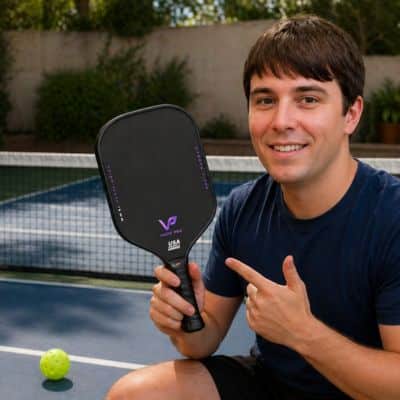
Dylan is a 4.5-rated pickleball player and gear writer who has tested 80+ paddles across 400+ hours on court. He rates spin, power, control, and forgiveness from real court time so you can buy smarter — no sponsored rankings, ever.