
JOOLA vs Selkirk (2026): Which Paddle Brand Fits Your Game?
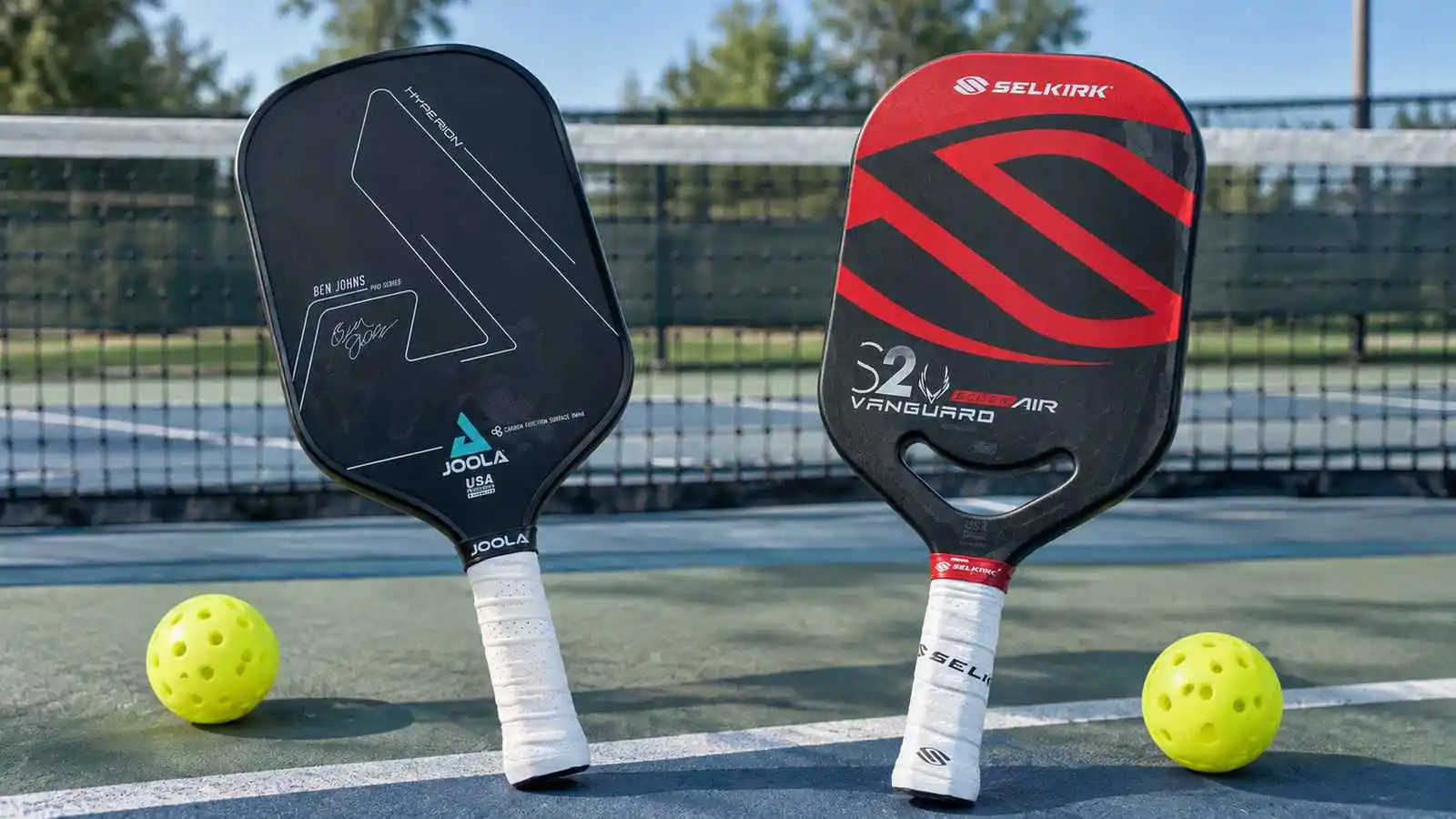
How I tested: Every paddle here was bought at retail with my own money and played across multiple court sessions: dinks, drives, drops, serves, and kitchen exchanges. Scores reflect real match play, cross-checked with 3.0–5.0 players. Full process: how I test pickleball paddles. Verify me on my DUPR profile.
Disclosure: The “View on Amazon” buttons on this page are affiliate links. I buy every paddle with my own money, and commissions never change a score. Prices change often, so check the current price on Amazon. Details here.
The Verdict: In the JOOLA vs Selkirk matchup, JOOLA wins on power and spin at the flagship level, and Selkirk wins on control, forgiveness, and hand speed at the kitchen. The right brand depends on your skill level: Selkirk’s SLK Halo for 3.0–3.5 players, JOOLA for 4.0+ players who generate their own pace.
- Choose JOOLA if: You are a 4.0+ player who wants tour-level power and heavy topspin (Top pick: JOOLA Perseus Pro V).
- Choose Selkirk if: You prioritize touch, forgiveness, and fast hand speed at the kitchen line (Top picks: SLK Halo Control XL or Selkirk Vanguard Power Air).
Want to see how they stack up against the rest of the market? See my best pickleball paddles of 2026.
The JOOLA vs Selkirk debate dominates local courts for a reason. Heading into 2027, these two brands represent different paddle philosophies. JOOLA comes from table-tennis engineering and builds its flagships for aggressive offense. Selkirk, a pickleball-native brand, leans on wide sweet spots, hand speed, and a deep lineup that starts well below $150.
I’ve tested 80+ paddles over 400+ hours with players from 3.0 to 5.0, and this comparison rests on the six JOOLA and Selkirk models below. The short version: it depends on your mechanics. JOOLA is the pick for 4.0+ players who create their own pace and want tour-level carbon-fiber pop. Selkirk wins if you want a softer, more forgiving feel (the SLK line), quicker hands at the kitchen line, or more choices under the $150 mark.
Jump to: Paddles I tested · Spin, power, control · Pick by rating · Tier matchups · Arm health · FAQs
JOOLA vs Selkirk: The Paddles I Tested
This comparison is built on six paddles I’ve tested in depth, not on spec sheets. Five have numeric scores out of 10 from my reviews and my best pickleball paddles for spin guide. The JOOLA Hyperion CFS 16mm is described in words in its review, so I do the same below.
| Paddle | Brand | Shape | Power | Control | Spin | Forgiveness |
|---|---|---|---|---|---|---|
| Ben Johns Perseus Pro V | JOOLA | Elongated | 10 | 8.5 | 9.5 | 8.5 |
| Agassi Heat Vision | JOOLA | Elongated | 8 | 8.5 | 8.5 | 8.5 |
| Vanguard Power Air S2 | Selkirk | Widebody | 9 | 8.5 | 9 | 8 |
| Labs Project Boomstik | Selkirk | Widebody (tested) | 9 | 8 | 8.8 | 7.8 |
| SLK Halo Control XL | Selkirk | Elongated | 7.5 | 9.5 | 8.5 | 9 |
Who Are JOOLA and Selkirk?
JOOLA has made table tennis equipment since 1952, long before pickleball was on its radar. It came into pickleball later and built its name on the pro game through its Ben Johns paddles, so its flagship paddles are built around elite, high-pace play rather than weekend comfort.
Selkirk is the opposite story. Founded in 2014 specifically for pickleball, it has one of the deepest catalogs in the sport, running from entry-level SLK paddles up to the Boomstik, the most expensive Selkirk I’ve tested. The SLK sub-brand targets beginners and intermediate players with raw carbon and fiberglass options that punch above their price.
That tension, elite table-tennis engineering versus pickleball-native design, runs through every JOOLA vs Selkirk comparison you’ll find, including this one.
If you’re weighing two JOOLA models against each other instead, the gap is bigger than shape. The Perseus Pro V is JOOLA’s tour-level flagship: thermoformed, head-heavy, and built for 4.0+ players who generate their own power. The Hyperion CFS 16mm sits a meaningful step below it, with a more forgiving, versatile feel that suits the 3.5–4.5 range.
What the Technology Actually Does
JOOLA: The Hyperion CFS uses Carbon Friction Surface, JOOLA’s proprietary textured Carbon-Flex5 face. It isn’t an open-pore raw T700 face, but in my testing it spins with raw T700 paddles and resists smoothing better than standard carbon coatings. The Perseus Pro V does use a raw carbon textured surface. Under the face, the Hyperion has a 16mm Reactive Polypropylene honeycomb core and a foam-injected perimeter JOOLA calls the Hyperfoam Edge Wall. That widens the sweet spot and adds stability on off-center contact, but it also pushes mass toward the top of the head, which is why the Hyperion swings heavier than its 8.4 oz static weight. The Pro V goes further with a thermoformed KineticFrame.
Selkirk: The SLK Halo Control XL pairs a 16mm Rev-Control polymer core with an 18k UltraWeave raw carbon face and prioritizes keeping the ball in play. The SLK lineup also includes Neo Fiberglass, Neo Graphite, and Atlas Raw Carbon options. Selkirk’s premium paddles step things up: the Vanguard Power Air uses a QuadFlex 4-layer hybrid face (Selkirk lists two layers of Fiberflex and two of Quantum+ carbon) over a 13mm SuperCore polymer honeycomb core, with an open Air-Dynamic Throat built to raise swing speed. The Boomstik goes to a full-foam BoomCore (PureFoam with an EVA Power Ring) and a 3-layer Multistrata T700 face with InfiniGrit texture.
JOOLA is built for players who generate pace. Selkirk’s SLK line is built for players who manage it, while its Vanguard and Boomstik paddles cover the power side.
Core thickness changes the feel too: the Hyperion runs a 16mm core and the Power Air a 13mm core. If you’re deciding between 13mm, 14mm, and 16mm, read my breakdown of whether pro players use 14mm or 16mm paddles.
JOOLA vs Selkirk: Spin, Power, Control, and Forgiveness Compared
Here’s how the two brands split each category, using my scores from the table above.
| Category | Edge | What My Testing Shows |
|---|---|---|
| Spin | JOOLA (flagship); tie (budget) | The Pro V rates 9.5 for spin, ahead of the Power Air at 9.0 and the Boomstik at 8.8. At the budget end it’s a tie: the Agassi and the SLK Halo both rate 8.5. The Hyperion’s CFS face also matched raw T700 options in my testing. |
| Power and pop | JOOLA | The Pro V rates 10 for power against 9 for both the Power Air and the Boomstik. The Hyperion is the best-driving 16mm paddle I’ve tested at its price. |
| Control and touch | Selkirk (SLK line) | The SLK Halo rates 9.5 for control against 8.5 for the Agassi and Pro V. Selkirk’s power paddles are different: the Boomstik rates 8, and the Power Air isn’t a dwell-based touch paddle. |
| Forgiveness | Selkirk (SLK line) | The SLK Halo rates 9 against 8.5 for the Pro V and Agassi. Selkirk’s power line is less forgiving: the Power Air rates 8 and the Boomstik 7.8. |
| Hand speed at the net | Selkirk | The Power Air’s open throat is the fastest through the air of any paddle in my spin guide, and the Boomstik Widebody was noticeably more agile than an elongated paddle. The Hyperion and Pro V are head-heavy. |
The pattern is simple. At the flagship level, JOOLA’s Pro V matches or beats both Selkirk power paddles in every category I score. Selkirk wins wherever its SLK Halo competes on control and forgiveness, plus hand speed at the net. For a detailed spin breakdown, read my best pickleball paddles for spin guide, or my best power pickleball paddles and best control paddles rankings.
Selkirk vs JOOLA (2026): Which Brand Fits Your Rating?
| Skill Level | Recommended Brand | Target Model | Why It Fits |
|---|---|---|---|
| 2.5–3.0 | Selkirk | SLK Halo Control XL View on Amazon | Rates 9 for forgiveness with a 16mm Rev-Control core. If you’re brand new, my best pickleball paddles for beginners guide covers starter paddles from every brand. |
| 3.0–3.5 | Selkirk (default) | SLK Halo Control XL View on Amazon | Rates 9.5 for control, which suits developing kitchen play. See my best pickleball paddle for intermediate players guide. |
| 4.0 | JOOLA | JOOLA Hyperion CFS 16mm View on Amazon | All-court drives for 4.0+ players who hit hard. |
| 4.5–5.0 | JOOLA | JOOLA Perseus Pro V View on Amazon | Tour-level power and spin for 4.5+ players who generate their own pace. Read my best pickleball paddles for advanced players guide. |
JOOLA vs Selkirk: Head-to-Head Tier Matchups
1. Budget and Intermediate Tier: JOOLA Agassi Heat Vision vs. Selkirk SLK Halo Control XL
Winner: Selkirk. Both are elongated 16mm carbon paddles, and they tie on spin at 8.5. The SLK Halo pulls ahead on control (9.5 vs. 8.5) and forgiveness (9 vs. 8.5), while the Agassi Heat Vision gives up a little in return with slightly more power (8 vs. 7.5). If budget is your main constraint, see my best pickleball paddles under $150 guide.
View JOOLA Agassi on Amazon View SLK Halo on Amazon
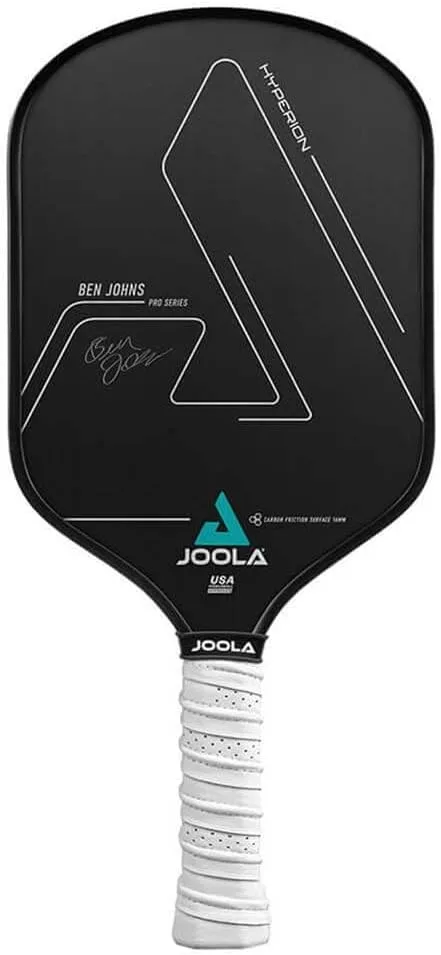
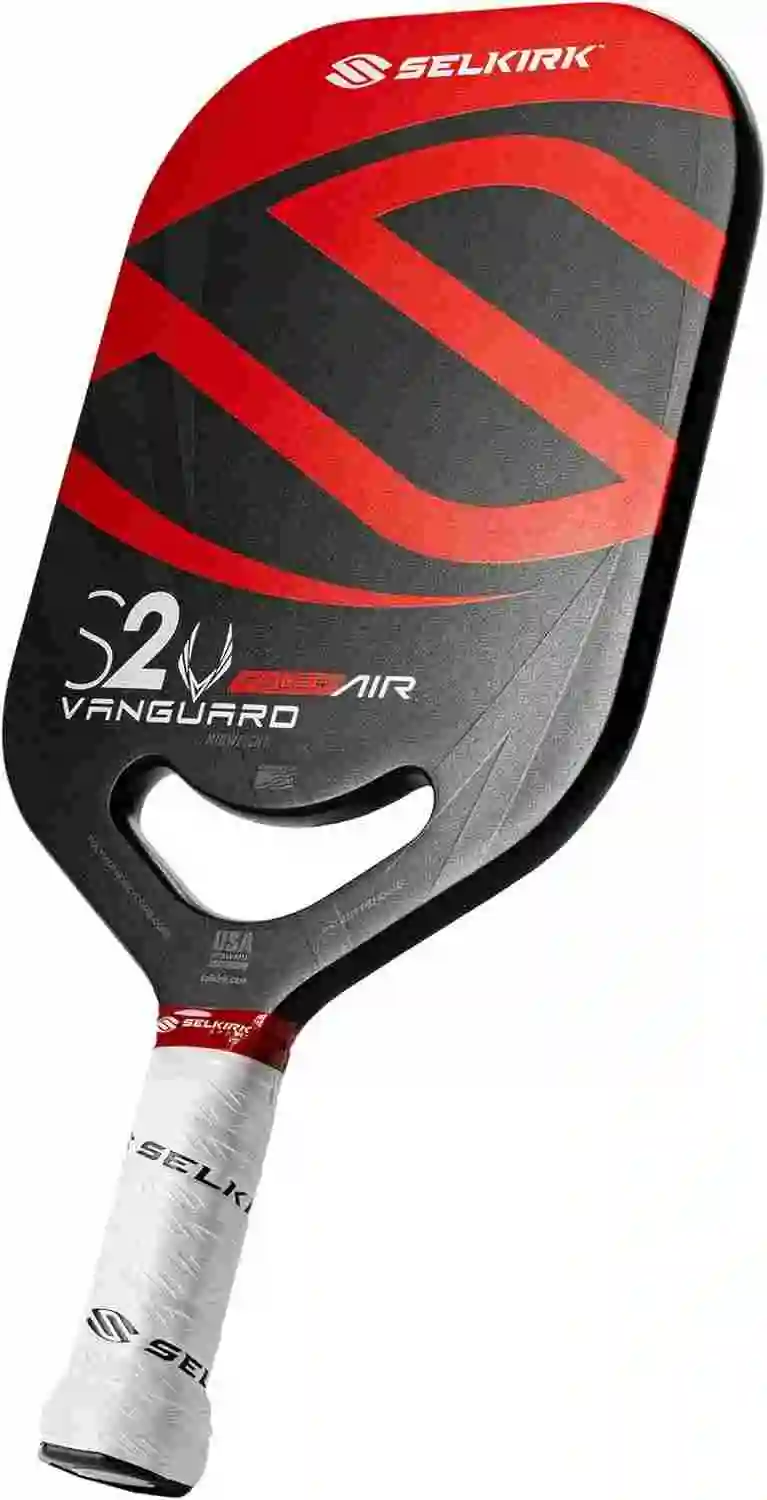
2. Mid-Premium Tier: JOOLA Hyperion CFS vs. Selkirk Vanguard Power Air S2
Winner: JOOLA (all-court performance). The Hyperion is the best all-court paddle I’ve tested in its class: crisp feel, strong spin, real pop for a 16mm, and a sweet spot bigger than its elongated shape suggests. It gives you more relevant performance for less money than premium tour gear. The Power Air counters with the widest face in Selkirk’s Vanguard line and a genuinely quicker swing thanks to the open Air-Dynamic Throat. If your game leans aggressive and all-court, JOOLA gets the edge, but the Power Air is the better pick if hand speed at the kitchen matters most.
3. Flagship Tier: JOOLA Perseus Pro V vs. Selkirk Boomstik
Winner: JOOLA, unless you live at the kitchen line. On my scores, the Perseus Pro V beats the Boomstik in all four categories: power (10 vs. 9), spin (9.5 vs. 8.8), control (8.5 vs. 8), and forgiveness (8.5 vs. 7.8). The Boomstik’s overall rating on my hub page is 8.4/10. It fights back with a Widebody shape that was noticeably more agile in net exchanges, plus a limited lifetime warranty. Both sit at the top of the market on price, and both ask for clean mechanics: the Pro V punishes sloppy contact, and the Boomstik has a hot launch angle and a real adjustment period on resets. Neither is a first paddle, and I’d save the Pro V for 4.0+ players.
Other Models in Each Lineup
The matchups above rest on the paddles I’ve tested in depth. For the wider lineups, the JOOLA Scorpeus gives you more pop and higher spin RPMs, while the Selkirk AMPED S2 gives you a larger sweet spot and softer dinks at the kitchen line, so that mid-tier pairing is a tie that depends on your style. Selkirk’s SLK Neo Fiberglass sets are a forgiving entry point with solid durability for beginners.
Arm Health and Vibration Dampening
The bigger arm issue with JOOLA isn’t vibration; it’s balance. The Hyperion’s Hyperfoam edge pushes mass toward the head, so it swings heavier than its 8.4 oz static weight, and in my testing that showed up in my arm after long sessions. The Pro V is head-heavier still. If you deal with tennis elbow or wrist sensitivity, the SLK Halo (a 16mm Rev-Control core that dampens vibration, at 7.7–8.0 oz) is the safer starting point. The Power Air at 8.1 oz also feels lighter than its weight thanks to the open throat. For more options, see my best pickleball paddles for tennis elbow.
Performance means nothing if your elbow keeps you off the court. For more on protecting your arm when you choose a paddle, see my guide on how to choose a pickleball paddle.
Final Verdict: JOOLA or Selkirk?
Choose JOOLA if you’re a 4.0+ player who drives hard, relies on heavy topspin, and wants aggressive pop. Start with the Hyperion CFS if you want one all-court paddle, and step up to the Perseus Pro V only if you already generate your own power.
Choose Selkirk if you’re building fundamentals, want extra control and forgiveness from the SLK Halo, or need quicker hands at the kitchen line from the Vanguard Power Air. I’d skip the Boomstik unless you already have clean mechanics and want a power paddle with a Widebody shape.
Still torn? Take the Paddle Finder quiz, compare every paddle I’ve tested in my best pickleball paddles of 2026, or see how the brands stack up in my ranking of who makes the best pickleball paddle. Every result here comes from the protocol I use to test pickleball paddles.
Also comparing Six Zero? See my best Six Zero pickleball paddles guide.
FAQs
Is JOOLA or Selkirk better?
Neither wins outright. At the flagship level, JOOLA’s Perseus Pro V scored higher than Selkirk’s Boomstik and Power Air for power and spin. Selkirk’s SLK Halo wins control and forgiveness, and the Power Air wins hand speed. Pick by skill level and playstyle, not brand loyalty.
Is Selkirk or JOOLA better for beginners?
Selkirk’s SLK line is friendlier. The SLK Halo Control XL rated 9 for forgiveness in my testing, while JOOLA’s Perseus Pro V punishes mishits and the Hyperion needs clean mechanics. If you’re brand new, also check my best pickleball paddles for beginners guide, since the top starter paddles come from several brands.
Selkirk SLK vs JOOLA: Which budget line is better?
For control and forgiveness, Selkirk’s SLK Halo Control XL beat the JOOLA Agassi Heat Vision in my testing (9.5 vs. 8.5 control, 9 vs. 8.5 forgiveness). They tie on spin at 8.5, and the Agassi has slightly more power (8 vs. 7.5). Pick the SLK Halo if you want a softer, more forgiving paddle.
Is JOOLA or Selkirk better for intermediate players?
At 3.0–3.5, Selkirk’s SLK Halo Control XL is my pick: it rated 9.5 for control and 9 for forgiveness. At 4.0+, JOOLA takes it: the Hyperion CFS 16mm for all-court drives, stepping up to the Perseus Pro V at 4.5+. See my best pickleball paddle for intermediate players guide.
Is JOOLA or Selkirk better for spin?
JOOLA, at the flagship level. The Perseus Pro V rates 9.5 for spin, ahead of the Selkirk Vanguard Power Air at 9.0 and the Boomstik at 8.8. At the budget end it’s a tie, with the JOOLA Agassi and Selkirk SLK Halo both at 8.5. See my best pickleball paddles for spin guide.
Is JOOLA or Selkirk better for power?
JOOLA. The Perseus Pro V is the hardest-hitting paddle I’ve tested, and I rated it 10 for power, compared with 9 for both the Selkirk Vanguard Power Air and Boomstik. If you want Selkirk’s version of power, the Boomstik is the paddle.
Is JOOLA or Selkirk better for tennis elbow?
Selkirk’s SLK Halo is the safer pick. JOOLA’s Hyperion and Pro V are head-heavy, and I felt that in my arm after long sessions. The Halo has a vibration-dampening 16mm Rev-Control core and a lighter 7.7–8.0 oz build. I’m not a doctor, so see one if pain persists.
What’s the difference between the JOOLA Hyperion CFS and Perseus Pro V?
The Pro V is JOOLA’s tour-level flagship: thermoformed KineticFrame, head-heavy, built for 4.0+ power. The Hyperion CFS sits a step below with a more forgiving, versatile feel that suits 3.5–4.5 players. Read my Hyperion review and Pro V review for the full breakdown.
Selkirk Boomstik vs JOOLA Perseus Pro V: which should I buy?
Buy the Pro V if you want maximum power and spin and you’re a 4.0+ player with clean mechanics. On my scores it beats the Boomstik in power, spin, control, and forgiveness. Buy the Boomstik Widebody only if you want a more agile net game and a lifetime warranty.
Are JOOLA paddles worth the money?
Yes, if you use the pace. The Hyperion CFS 16mm is the best all-court value I’ve tested in its class, and the Perseus Pro V is worth its premium only for 4.0+ players with clean mechanics. Below 4.0, Selkirk’s SLK Halo offers more forgiveness as your mechanics develop.
Dylan is a 4.5-rated pickleball player and gear writer who has tested 80+ paddles across 400+ hours on court. He rates spin, power, control, and forgiveness from real court time so you can buy smarter — no sponsored rankings, ever.