
Best Pickleball Paddles for Advanced Players 2026: 12 Tested

Disclosure: Some buttons on this page are affiliate links (Amazon and brand stores). I buy every paddle with my own money, and commissions never change a score. Prices change often, so check the current price. Details here.
At 4.0 and above, the paddle conversation changes. You’re not looking for forgiveness anymore. You’re looking for a paddle that gives you back exactly what your hands put in — the spin you shaped, the pace you generated, the placement you intended. Not a corrected version of it.
I’ve tested 80+ paddles across 400+ hours of court time to find the best pickleball paddles for advanced players. My testing group (ranging from 3.5 to 5.0) put each one through real match play, specifically analyzing swing weight, twist weight, and grit retention past the 40-hour mark. The 12 below are what’s working at the 4.0–5.0 level right now. The market has moved hard toward foam-core, while technologies like KineticFrame have built massive momentum over the past year — if you’re still playing a traditional Gen 2 honeycomb paddle and something feels off, that structural shift is likely why.
If you want to see my full testing roster across every skill tier, visit my best pickleball paddles guide.
Jump to: Quick Answer | What to Look For | Comparison Table | The 12 Paddles Reviewed | By Playing Style | FAQs
Quick Answer: The best pickleball paddle for advanced players in 2026 is the JOOLA Perseus Pro V 16mm. Its KineticFrame construction stabilizes off-center hits better than any paddle on the market, making it the premier choice for 4.5+ players. For players transitioning from intermediate to advanced (4.0), the Bread & Butter Loco provides elite dual-density foam core performance at a significantly lower price point.
The Top Advanced Paddles at a Glance:
- Best Overall (4.5+): JOOLA Perseus Pro V 16mm (Thermoformed)
- Best Value Advanced: Bread & Butter Loco (Dual-Density Foam Core)
- Best for Doubles: RPM Friction Pro (Widebody)
- Best Budget Advanced: Selkirk Vanguard Power Air (QuadFlex Face)
- Best for the 4.0 Transition: Paddletek Bantam GTO-C (12.7mm Core)
My Top Picks at a Glance
JOOLA Pro V 16mm
The absolute benchmark for elite play. Features groundbreaking KineticFrame tech that stabilizes off-center hits and provides flawless mechanical feedback. Built for 4.5+ players who want zero compromise on spin and precision.
View on AmazonRPM Friction Pro Widebody
The widest sweet spot in the lineup and the fastest hands at the net. The Tri-Density Core gives you a plush touch on resets without losing explosive pop on hard contact — built for kitchen-heavy doubles play.
View on RpmpbSelkirk Vanguard Power Air
Real Selkirk engineering — QuadFlex 4-layer hybrid face and FlexFoam perimeter tech — for a third of the price of the Boomstik. You give up some edge stability on off-center hits, not the core performance.
View on AmazonBest Advanced Pickleball Paddles: Quick Comparison
Each rating is the plain average of the four scores (power, control, spin, forgiveness) shown on that paddle’s card below, so a paddle that wins one category can still land lower overall. The “best for” labels are my picks by player type, not a ranking by score.
| Product | Recommendation | Tech Specs | Dylan’s Rating | Shop |
|---|---|---|---|---|
 JOOLA Pro V 16mm |
Best Overall (4.5+) | Elongated / 16mm / 5.5″ Grip KineticFrame Adaptive Flex |
9.1 |
View on Amazon |
 Bread & Butter Loco 16mm |
Best Value Advanced | Standard / 16mm / 5.3″ Grip Dual-Density Foam (EPP+EVA) |
9.3 |
View on Bnbpickleball |
 RPM Friction Pro Widebody |
Best for Doubles | Widebody / 16mm / 5.25″ Grip CarbonBite Face & Tri-Density Core |
9.2 |
View on Rpmpb |
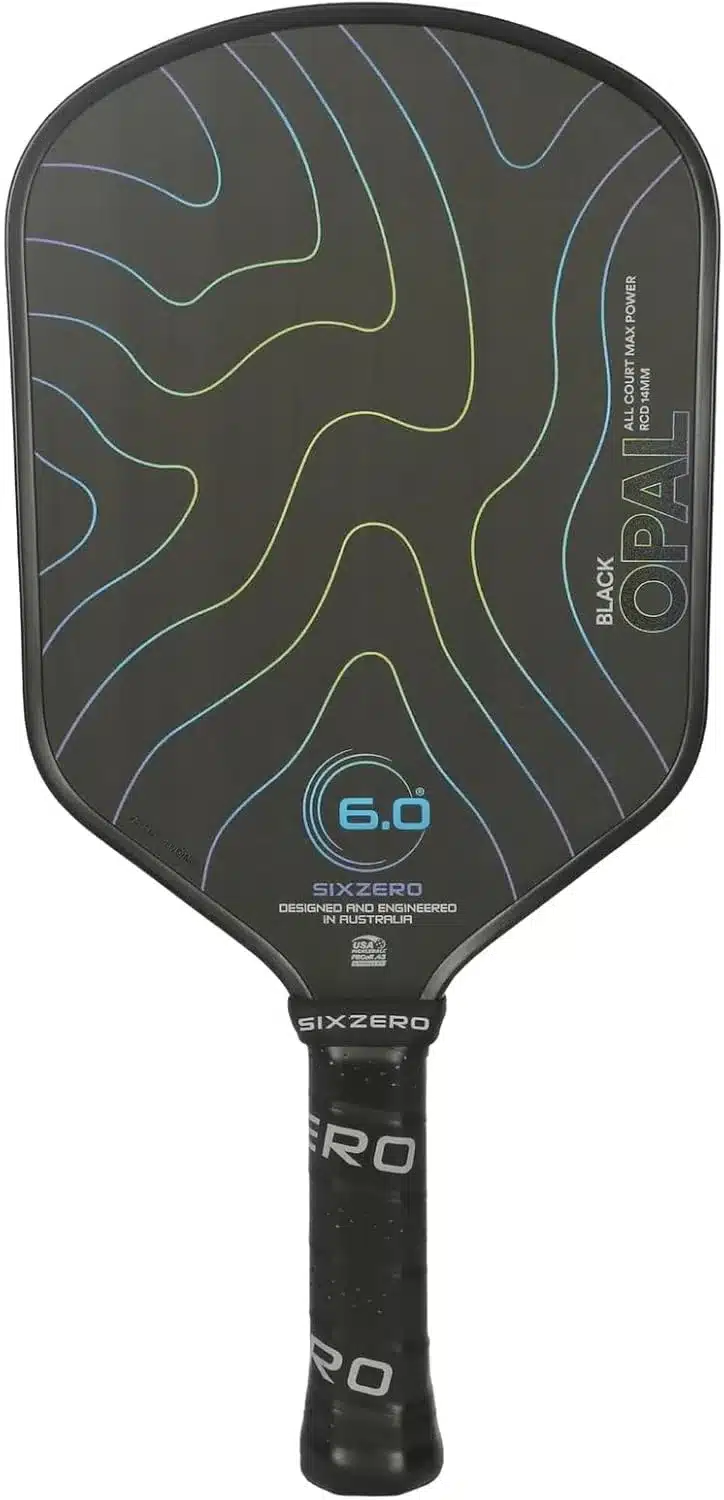 Six Zero Black Opal |
Best Power-First | Hybrid / 14mm / 5.5″ Grip G4 Aerospace Foam Core |
9.7 |
View on Amazon |
 JOOLA Pro V Perseus |
Best Dynamic Flex | Elongated / 16mm / 5.5″ Grip KineticFrame Adaptive Flex |
9.1 |
View on Amazon |
 Honolulu J6CR |
Best Foam-Core Control | Elongated / 16mm / 6.0″ Grip Control Joint Tech (Pre-Order) |
9.2 |
View on 808pickle |
 Franklin C45 Dynasty |
Best All-Court Consistency | Elongated / 14mm / 5.6″ Grip 45° Angled T700 Carbon Face |
9.1 |
View on Amazon |
 JOOLA Professional |
Best Crisp Feel | Hybrid / 16mm / 5.5″ Grip Charged Carbon & Honeycomb Polymer |
9.1 |
View on Amazon |
 Selkirk Labs Boomstik |
Best Drive Weapon | Widebody / 16mm / 5.6″ Grip BoomCore & InfiniGrit Face |
9.3 |
View on Selkirk |
 Selkirk Vanguard Power Air |
Best Budget Advanced | S2 Standard / Foam Core QuadFlex 4-Layer Face |
8.4 |
View on Amazon |
 11SIX24 Pegasus Power 2 |
Best Power With a Second Gear | Standard / Gen 4 Floating Core HexGrit Face |
8.6 |
View on Amazon |
 Paddletek Bantam GTO-C |
Best for the 4.0 Transition | Tapered Hybrid / 12.7mm Polymer Core T700 Raw Carbon Face |
8.4 |
View on Amazon |
What You’re Actually Buying at This Level
When I put advanced paddles in front of 3.5 players as part of testing, most of them perform worse. Not slightly — noticeably. Mishits that would have stayed in with a forgiving intermediate paddle now spray wide or die in the net. That’s not the paddle failing. That’s it, doing exactly what it’s supposed to do.
An advanced paddle doesn’t cover for inconsistency. The face is grippier and more responsive, which means every small error in timing or angle shows up in the ball flight. If you want a detailed breakdown of how materials and core specs alter these dynamics, check out my guide on what makes a good pickleball paddle before upgrading.
The upside is that everything you do right comes back amplified, too. Topspin bites harder. Drives carry more pace. Drops that just cleared the kitchen tape with your old paddle now die exactly where you aimed them.
What I look for specifically: top-tier spin potential, a balanced-to-driving swing feel for all-court players, and face material that holds texture past 60 hours of hard play. Advanced players accelerate face wear — a face that lasts 80+ hours on a 3.5 player might go at 40+ hours on a 4.5 who hits harder and more frequently. Durability is part of the value calculation in a way that it isn’t for intermediate paddles.
What Actually Changes at the Advanced Level
The paddle stops correcting for you. At 3.5 and below, a forgiving core hides a late swing or an off-center hit. At 4.0+, the same mishit sprays wide or dies in the net — the paddle isn’t failing; it’s just not covering for you anymore. What you’re buying at this level is direct feedback, not forgiveness.
16mm vs. 14mm Core at 4.0+
16mm is the safer default for most advanced players — more dwell time, more margin on resets and transition shots. 14mm trades that margin for faster exit speed off the face, which only pays off if your contact is consistent enough that you’re not giving that speed back on mishits. If you’re not sure which camp you’re in, start at 16mm.
Face Material and How Long the Grit Actually Lasts
Raw carbon faces generate the spin, but they wear. At advanced swing speeds, that wear shows up faster — a face that holds texture for 80 hours under a 3.5 player’s swing can be noticeably smoother by hour 40 under a 4.5’s. Budget for replacing your face-forward paddle every 3-6 months of serious play, not the 12+ months a beginner might get.
Swing Feel: All-Court vs. Drive-First
Light, fast-swinging paddles (Loco, RPM Friction Pro) win hand battles at the net but ask more of your soft game to control pace. Heavier, drive-oriented builds (Boomstik, Black Opal) generate pace on their own but punish hesitation in fast exchanges. Match this to how you actually win points, not to the spec sheet.
How I Tested
I tested with ten players — three at 4.0, three at 4.5, two at 5.0, and two at 3.5, specifically to see what happens when developing players use equipment above their level. All testing ran between February and May 2026 across both indoor and outdoor courts.
I evaluated spin rotation tiers through consistent mechanical swing paths, analyzed swing feel and weight distribution across dynamic kitchen and drive drills, and tracked surface grit retention past 40-hour and 80-hour match intervals. Every paddle was bought at retail — no sponsored units, ever.
12 Best Pickleball Paddles for Advanced Players: A Close Look
JOOLA Pro V 16mm
Best Overall (4.5+)
| Shape | Agassi Elongated (16.5″ × 7.5″) |
| Weight | 8.1 oz avg |
| Grip Length | 5.5″ |
| Core Thickness | 16mm KineticFrame |
| Face Material | Reinforced Raw Carbon Fiber Textured |
| Thermoformed | Yes |
The KineticFrame is the thing that sold me on this paddle, and I went in skeptical. The concept — a frame that flexes on impact like a hockey stick and then snaps back — sounds like the kind of thing marketing departments invent after the product already exists. But I caught a ball on the edge of the sweet spot during my first session, and it didn’t deflect the way I expected. Caught it again later. Same result. By session three, I stopped doubting it and started trusting it.
What KineticFrame actually does on court: the paddle recovers faster between contacts in fast exchanges, and off-center hits stay closer to your intended line. In tight competitive games where you’re not always catching the ball perfectly in the center, that reliability is the whole argument for $300.
The Agassi shape runs 16.5 inches, fully elongated, and TechFlex Power extends the sweet spot into the upper edges. The raw carbon textured face is generating the spin numbers you’d expect at this price — top tier in my testing. The NFC chip is there for warranty registration through the JOOLA Connect app; use it, because a 12-month warranty on a $300 paddle is worth registering.
One thing worth knowing: the Pro V comes in several style variants — Agassi, Perseus, Scorpeus, Graf, others — at the same price. The construction is the same across them. Pick whichever shape suits your eye.
The 14mm is also available at the same price. If you’re a power-first player with very consistent contact and you want that snappier response on drives, try it. But start here with 16mm unless you have a specific reason not to. Full JOOLA Pro V review →
Buy if:
You play high-level competitive matches where off-center blocks and resets must stay in play; the KineticFrame technology minimizes twisting beautifully.
Your game relies on heavy topspin dips and sharp undercutting slices; the surface grit ceiling is engineered for advanced paddle speeds.
Pass if:
The premium $299.95 entry price is tough to swallow if you aren’t playing in sanctioned tournaments or high-stakes leagues regularly.
Bread & Butter Loco 16mm
Best Value Advanced
| Shape | Standard (16.0″ × 8.0″) |
| Weight | 8.0–8.1 oz |
| Grip Length | 5.3″ |
| Core Thickness | 16mm Dual-Density Foam (EPP + EVA) |
| Face Material | T700 Raw Carbon Fiber + Fiberglass Layer |
| Thermoformed | Yes |
Before I bought one, the Loco kept showing up in the hands of 4.5+ players at open play draws I was watching. Not beginner players who’d bought whatever was recommended online — competitive players who’d tried multiple paddles and landed here. That’s the signal I pay attention to. In my testing, the low swing weight (110) makes it incredibly maneuverable at the net, which is vital for advanced doubles play.
After three weeks, it’s the paddle I reach for most. The dual-density foam core — EPP and EVA layers together — does something most foam paddles don’t: it gives you real dwell time on drops without the bouncy overreaction that makes kitchen play a guessing game on other foam builds. A reset doesn’t pop up. A drop actually sits. The fiberglass layer under the T700 carbon face adds enough pop on drives to finish points without making the paddle feel like a weapon that’s fighting your soft game.
With its ultra-light, nimble swing feel, it shares the absolute fastest handling tier on this list alongside the RPM Friction Pro. In hand battles at the net, this light swing feel shows up as your paddle arriving a fraction earlier than a heavier driving option would. Over the course of a tight match, that fraction matters.
The 30-day return policy is worth flagging. At $199 for a paddle that’s not on Amazon, being able to try it and send it back within 30 days significantly reduces the risk. Not a lot of brands offer that.
Buy if:
You prioritize low swing weight for quick hand-battles; testers noted its exceptional maneuverability at the net.
You love a soft “dwell time” feeling where the ball sinks into the face for precise, dropping third-shot drops.
Pass if:
This paddle is sold directly through the manufacturer to protect margins, meaning you can’t leverage Prime shipping or Amazon gift balances.
RPM Friction Pro Widebody
Best for Doubles
| Shape | Widebody (16.0″ × 8.0″) |
| Weight | 7.9 oz avg |
| Grip Length | 5.25″ |
| Core Thickness | 16mm Tri-Density Core |
| Face Material | CarbonBite Carbon Fiber Surface |
| Thermoformed | Yes |
RPM’s whole founding premise was figuring out how to maximize the coefficient of friction on a carbon face — more grit, more spin, more RPM, hence the name. The CarbonBite surface is what came out of that. In testing, the Friction Pro consistently sits at the top of balanced performance metrics — not just spin, but spin plus control plus feel together. If you optimize one thing and sacrifice the others, you get a specialized paddle. This one doesn’t make that trade.
Ignatowich calls the widebody the best paddle for doubles specifically, and the specs back him up — swing weight 109, widest sweet spot in the lineup, best maneuverability for kitchen exchanges. The Tri-Density Core uses three different materials of varying density in the same core, which is what produces the plush feel on touch shots without losing explosive transfer on hard contact. That’s the thing most cores can’t do simultaneously.
Not on Amazon — direct from rpmpb.com. The elongated is also available if reach matters more to you than sweet spot size, but for pure doubles play, the widebody is the call.
Buy if:
The widebody profile maximizes the horizontal sweet spot, making it highly forgiving on desperate, reflex blocks in tight cross-court dink wars.
You struggle with the paddle head twisting on off-center hits; the Tri-Density core keeps the face flush even on edge-guard contacts.
Pass if:
The shorter 16-inch widebody length limits leverage; aggressive court-coverage singles players will miss the extra half-inch of an elongated shape.
Six Zero Black Opal
Best Power-First
| Shape | Hybrid |
| Weight | 8.0–8.3 oz |
| Grip Length | 5.5″ |
| Core Thickness | 14mm G4 Aerospace Foam |
| Face Material | Diamond Tough Raw Carbon Fiber |
| Thermoformed | Yes |
When you hit the sweet spot cleanly with the Black Opal, the sound is different from anything honeycomb produces. Not a pop — a thud. Dense and solid, the kind of contact that tells you the ball is going exactly where you sent it before you even look up. The G4 Aerospace foam core transfers energy differently than standard cores, and that difference is immediately obvious.
The diamond-infused face is the other thing. Three weeks of daily sessions, and the surface texture is still the same as day one. Most raw carbon starts smoothing out faster than brands will admit — this one hasn’t. Whether that holds at six months, I can’t say yet, but the early durability signal is better than most.
The Shock Shield handle surprised me. Two players in my testing group, managing chronic elbow issues, both got through full sessions without the usual complaints. For a 14mm power paddle that’s transmitting real energy, that’s not expected.
The tradeoff is feel, not forgiveness: I scored it 9.7 for forgiveness, but the dense 14mm foam is firmer and less plush on soft kitchen touch shots than a 16mm Loco or the Pro V. It fits advanced players who want the most aggressive tool available. Full Black Opal review → · Full details in the Six Zero guide.
Buy if:
You want immediate, crisp ball acceleration off the face; the 14mm profile combined with Aerospace foam creates massive put-away speed.
You love punishing deep returns with immediate, hard-driving passing shots from the baseline.
Pass if:
The dense 14mm foam feels firmer than a plush 16mm paddle, so delicate, slow dink marathons take more feel if your hands are tense.
JOOLA Pro V Perseus
Best Dynamic Flex
| Shape | Elongated (16.5″ × 7.5″) |
| Weight | 8.1 oz avg |
| Grip Length | 5.5″ |
| Core Thickness | 16mm KineticFrame |
| Face Material | Carbon Friction Surface (CFS) |
| Thermoformed | Yes |
The JOOLA Pro V Perseus introduces groundbreaking KineticFrame technology, inspired by the flex of a hockey stick. This paddle adapts to your swing—loading and releasing energy for explosive power on drives while maintaining forgiveness on defensive shots. It blends advanced materials with an elongated shape to deliver pro-level performance for competitive players.
Why It Wins
The Perseus and the Agassi share the same underlying KineticFrame construction—the key difference lies in the weight distribution and head profile. While both measure an identical 16.5 inches in total length, the Perseus utilizes a traditional square-headed, elongated shape that concentrates more mass toward the tip. This design provides noticeably more mechanical leverage on serves and a more generous hitting area at maximum extension than the tapered Agassi shape. If you’ve always played a traditional elongated paddle and the Agassi profile feels unfamiliar, start here. Same price, same technology, different balance point in the hand.
The elongated distribution does pull weight toward the tip, which makes it feel slightly head-heavy in rapid hand exchanges compared to the Agassi. That’s not a flaw — it’s a characteristic. Singles players and aggressive baseliners who want maximum leverage will prefer it. Doubles players who live in the kitchen may find the Agassi quicker.
Buy if:
You love a traditional 16.5-inch length to add extension to your overhead smashes and whip heavy topspin serves from deep corners.
You want a paddle that flexes just enough under high load to keep explosive baseline drives reliably inside the back line.
Pass if:
The elongated distribution naturally pulls weight toward the tip, making it feel slightly more head-heavy during quick reflex volleys.
Honolulu J6CR
Best Foam-Core Control
| Shape | Optimized Elongated (16.48″ × 7.52″) |
| Weight | 8.0–8.2 oz |
| Grip Length | 6.0″ |
| Core Thickness | 16mm Multi-Density Foam |
| Face Material | Raw Carbon Fiber (Dynamic PowerFlex) |
| Thermoformed | Yes (Thermocompression Forming) |
Say this clearly upfront: the J6CR is a pre-order right now. Check the Honolulu site for the current batch ship date — they sell out quickly. If you need a paddle this week, come back to this one later.
The reason it’s on this list despite the pre-order status: it has sold out seven batches, which isn’t a thing that happens to bad paddles. The Control Joint Technology — patent pending — is Honolulu’s answer to the main complaint about foam-core paddles, which is that the response feels unpredictable to players coming from honeycomb backgrounds. The core is designed to manage and redirect ball energy with more consistency than other foam builds. Players who’ve bounced off foam paddles in the past specifically because of that erratic feeling report that the J6CR is different.
The 6-inch grip is the longest on this list, which matters if you two-hand your backhand or just prefer more room in the handle. At $195, it’s also the least expensive direct-brand option here, which makes the pre-order less risky if you can plan around the ship date.
Buy if:
The generous 6.0-inch extended grip length gives ample space for clean, comfortable two-handed tracking and powerful hip rotation.
The specialized Control Joint engineering eliminates harsh frame vibration, allowing for absolute touch perfection on drops.
Pass if:
Frequent pre-order waves mean you might have to wait several weeks for fulfillment, making it a poor choice if your current paddle just snapped.
Franklin C45 Dynasty
Best All-Court Consistency
| Shape | Elongated (16.4″ × 7.6″) |
| Weight | 7.5–7.9 oz |
| Grip Length | 5.6″ |
| Core Thickness | 14mm PowerFlex Polymer + Foam |
| Face Material | T700 Carbon Fiber (45-Degree Angle) |
| Thermoformed | Yes (Double Thermoforming) |
The 45-degree face angle is the specific thing Franklin does differently. Standard carbon faces concentrate their texture in certain zones — the 45-degree orientation distributes grit consistently across the full face, which means the surface performs the same at the edges as it does in the center. In practice, spin on intentionally off-center shots — slices, angles, drops at the side of the kitchen — behaves more predictably.
Anna Leigh Waters moved to C45 after joining Franklin in early 2026. She’s not the reason this is on the list, but she’s the signal about what kind of player it suits — someone who wins through consistency, placement, and spin over multiple-game sets rather than through pace on any single shot. In extended sessions with my 4.5+ testing group, the Dynasty produced the most consistent results across the longest time frame of anything here. No big surprises either way.
One thing to sort out before buying: the Amazon listing shows this under a “16mm” tab, but the actual spec sheet says 14mm core. The physical paddle is 14mm. If you’re shopping on Amazon, filter by the spec sheet, not the tab label. I’m flagging it because it matters if core thickness is part of your decision — don’t rely on the listing; rely on the spec sheet. Full Franklin C45 Dynasty review →
Buy if:
You value a predictable, classic honeycomb response that doesn’t exhibit unexpected foam “hot spots” during high-impact strikes.
The 45-degree woven T700 carbon orientation grips the ball aggressively during directional slices and rolls.
Pass if:
It requires a fast, complete swing path to generate deep depth; it will not generate high ball velocity on short, lazy punch motions.
JOOLA Professional
Best Crisp Feel
| Shape | Hybrid (16.0″ × 8.0″) |
| Weight | 8.0 oz avg |
| Grip Length | 5.5″ |
| Core Thickness | 16mm |
| Face Material | Charged Carbon |
| Thermoformed | Yes (Unibody) |
The Professional is the paddle for players who specifically hate the mushy, dampened feel of foam cores. Where the Pro V and the Loco absorb and pocket the ball, the Professional pings it off immediately — Charged Carbon face, stiff unibody frame, crisp and loud at contact. If you’ve tested foam paddles and the response felt disconnected, this is the corrective.
The Feel-Tec grip is genuinely the best factory grip on any JOOLA model — tacky, sweat-resistant, and stays put in fast exchanges. The rounded corner shape cuts wind resistance at the net without shrinking the useful hitting area.
What it doesn’t do: absorb much. Off the kitchen line on fast incoming shots, the stiffness that makes it feel so direct can make absorbing pace harder. If your soft game still needs development, the Pro V or the Loco gives you more margin.
Buy if:
You favor the direct, stiff acoustic ping of Charged Carbon; it provides immediate tactical feedback straight into your palm.
The standard hybrid proportions deliver a predictable sweet spot transition from baseline defense up to kitchen offense.
Pass if:
Because it lacks dense internal perimeter dampening foams, the sensation at contact feels much stiffer than the Pro V series.
Selkirk Labs Project Boomstik
Best Drive Weapon
| Shape | Widebody (Elongated Available) |
| Weight | 8.0–8.4 oz |
| Grip Length | 5.6″ |
| Core Thickness | 16mm BoomCore (PureFoam + EVA Ring) |
| Face Material | Multistrata T700 Carbon (3 Layers) |
| Thermoformed | Yes |
The BoomCore — PureFoam with an EVA Power Ring fused around it — is the most powerful core construction I’ve tested. Selkirk says it shaves 25 milliseconds off your opponent’s response window. That sounds like something someone says in a commercial. But then you watch a 4.5 player frame a ball they’d normally handle cleanly, and you understand what 25 milliseconds means on court.
The MOI Tuning System is precision weights clamped to the edge guard, shifting mass toward the outer regions to maximize moment of inertia. The widebody version runs twist weight 8.2 — the highest on this list by a significant margin, which means the paddle resists twisting on off-center hits better than anything else here. For a power paddle, that stability on imperfect contacts is genuinely unusual. Most power paddles make you choose between pop and forgiveness. The Boomstik narrows that trade considerably.
The InfiniGrit surface holds texture three times longer than standard raw carbon per Selkirk’s testing, which is relevant at $333 — you want this paddle to last.
At that price, the Limited Lifetime warranty matters. Selkirk sends a replacement before you return the defective one, which is the best warranty policy in the sport.
Not on Amazon — selkirk.com directly. One thing to know for tournament players specifically: the standard Boomstik with MOI Tuning System is not UPA-approved for PPA Pro Qualifier, Main Draw, or Challenger Pro Division events. You’d need to request the UPA-approved Elongated without MOI through Selkirk. If you’re competing at that level, you already know to check this, but it’s worth flagging. Full Selkirk Labs Boomstik review →
Buy if:
The BoomCore engine translates heavy arm speeds into flat, blistering drives that force immediate pop-ups from your opponents.
You break paddles quickly through intense play; Selkirk Labs backing ensures a robust warranty protection safety net.
Pass if:
The dynamic pop can be hard to manage when trying to absorb pace on fast chest-high attacks, occasionally causing drops to sail long.
Selkirk Vanguard Power Air
Best Budget Advanced
| Shape | S2 Standard |
| Weight | 7.7 oz |
| Grip Circumference | 4 1/8″ |
| Core Thickness | 13mm SuperCore Foam + FlexFoam Perimeter |
| Face Material | QuadFlex 4-Layer Hybrid (2x Fiberflex + 2x Quantum+ Carbon) |
| Thermoformed | Not listed by manufacturer |
Everything else on this list costs $199-333. The Vanguard Power Air is $99.99, and after three sessions I stopped expecting it to feel like a budget paddle. The QuadFlex face — two layers of Fiberflex sandwiched with two layers of Quantum+ carbon — gets you real stiffness in both directions, which is where most cheaper paddles fall apart: they flex where you don’t want flex, and the ball goes soft when you’re trying to drive.
Where it gives ground to the Boomstik and the Pro V is edge stability on off-center contact — the lower twist weight means you feel more torque on a mishit than you do with the paddles carrying the $300 price tag. That’s the trade you’re making, and it’s a fair one at a third of the cost.
The one real complaint I’d flag, and I’m not the only one: the handle runs short. If you play with two hands on your backhand or just like extra room, it’s noticeably tighter than the Boomstik’s grip. Not a dealbreaker, but know it going in. Full Selkirk Vanguard Power Air review →
Buy if:
You want real Selkirk engineering and QuadFlex performance without the $300 price tag.
You want a paddle that does both without specializing hard in either direction.
Pass if:
If you two-hand your backhand or just prefer a longer handle, the S2’s grip length will feel tight fast.
11SIX24 Pegasus Power 2
Best Power With a Second Gear
| Shape | Standard (15.8″ x 8.12″) |
| Weight | 8.0 oz avg |
| Grip Circumference | 4 1/8″ |
| Core Thickness | 16mm Gen 4 Floating Core |
| Face Material | HexGrit Carbon Fiber Surface |
| Thermoformed | Not listed by manufacturer |
Most power paddles give you one setting: hard. The Pegasus Power 2’s floating core is the first Gen 4 build I’ve tested that actually backs off when you back off — load up on a third-shot drive, and it delivers, but slow your hands down at the kitchen, and it doesn’t fight you the way most power-first paddles do. That range is the whole pitch, and it held up across sessions.
HexGrit is 11SIX24’s in-house surface tech, and the spin held its bite through my full testing window without the smoothing-out I’ve seen on cheaper raw carbon faces by week two.
Worth knowing: this is a newer release, and it doesn’t have much of an online track record yet — don’t judge it by star count. My own hours on it are what I’m going on here, and it earned its spot.
Buy if:
You want baseline pop without giving up a soft, controllable kitchen game.
HexGrit held its grit through extended testing without the early smoothing I’ve seen elsewhere.
Pass if:
It’s new enough that there’s not much outside proof yet beyond my own testing hours — trust the paddle, not the review count.
Paddletek Bantam GTO-C
Best for Intermediate to Advanced Players
| Shape | Tapered Hybrid (16.25″ x 7.75″) |
| Weight | 7.9 oz avg |
| Grip Length / Circumference | 5.5″ length / 4.25″ circumference |
| Core Thickness | 12.7mm Polymer |
| Face Material | Toray T700 Raw Carbon Fiber |
| Certification | UPA-A & PBCoR .43 |
The Bantam GTO-C runs the thinnest core on this entire list — 12.7mm polymer against a field of 14-16mm foam and honeycomb. That’s not a knock; it’s the point: this is the most forgiving, control-first paddle in the group, and it’s honestly better suited to a player pushing from intermediate into advanced than someone already living at 4.5+.
The tapered shape does real work here — it extends the sweet spot further than the thin core would suggest, and the T700 raw carbon face gets you legitimate spin without needing the extra thickness the rest of this list relies on for power. It’s tournament-certified (UPA-A, PBCoR .43), so it’s not a lightweight choice — it’s a deliberately different one.
One thing to sort before buying: Paddletek markets this as “intermediate to advanced,” and that’s accurate. If you’re already a 4.5 wanting max spin and pace, this will feel undergunned next to the Pro V or the Boomstik. If you’re a strong 3.5-4.0 stepping up, this is the most natural bridge on the list.
Buy if:
Thinnest, most forgiving core here makes this the softest landing into advanced-level gear.
UPA-A and PBCoR .43 certified out of the box.
Pass if:
The thin 12.7mm core simply won’t keep up with the pace the honeycomb and thick-foam paddles above generate.
By Playing Style
- All-court 4.0–4.5, want one paddle that handles everything: Bread & Butter Loco. Its light, nimble swing feel keeps it fast; the dual-density foam core handles soft and hard shots without asking you to specialize.
- Competing at 4.5+ and want the best available right now: JOOLA Pro V 16mm. KineticFrame consistency under pressure is the most significant performance advancement in 2026.
- Doubles specialist, kitchen-heavy game: RPM Friction Pro 16mm Widebody. Tied for the quickest, most nimble swing feel on this list with a light 7.9 oz static weight, it provides the widest horizontal sweet spot and elite spin from its CarbonBite surface.
- Drive-first, power-forward game: Selkirk Boomstik (elongated for reach, widebody for sweet spot size) or Six Zero Black Opal for hybrid shape + foam core explosiveness.
- Want foam-core power with more predictable control: Honolulu J6CR — but note the pre-order status and plan accordingly.
- All-court consistency over multiple seasons; want something reliable at 4.5+: Franklin C45 Dynasty. Consistent performer, Anna Leigh Waters–level pedigree, on Amazon.
- Budget-conscious, want proven Selkirk engineering without the $300 price tag: Selkirk Vanguard Power Air. QuadFlex gets you real power and spin for a third of the Boomstik’s cost — you give up some edge stability, not the core performance.
- Want power that doesn’t lock you into one gear: 11SIX24 Pegasus Power 2. The floating core dials back for resets without changing your swing.
- Coming up from intermediate, not ready for a max-spec paddle yet: Paddletek Bantam GTO-C. Thinnest core on this list, tournament-certified, and the most forgiving entry point into advanced-level equipment.
Final Verdict
If budget isn’t an issue, the JOOLA Pro V 16mm (or elongated Perseus) is the ultimate premium choice for elite stability and spin control, while the Bread & Butter Loco offers the absolute best value with its fast, tournament-winning dual-density foam core. For specialized styles, choose the RPM Friction Pro Widebody to dominate quick doubles exchanges at the kitchen line, grab the Selkirk Boomstik or Six Zero Black Opal if you demand raw point-ending power, or stick with the Franklin C45 Dynasty or JOOLA Professional for a crisp, balanced feel that rewards tactical precision.
Not sure if you’re actually at the advanced level yet? The intermediate players guide covers the 3.0–4.0 range in full — and the paddle finder quiz will tell you which tier fits your current game.
FAQs
What makes a paddle “advanced” vs. intermediate?
Feedback and precision. An advanced paddle delivers direct energy transfer and high spin potential rather than correcting for off-center contact. Advanced models reward clean mechanics but expose mishits far more ruthlessly than forgiving intermediate pickleball paddles.
Should I choose a 16mm or 14mm core at the advanced level?
16mm for all-court control; 14mm for raw drive speed. 16mm cores provide longer dwell time and transition resets, making them the default choice for most 4.0+ players. 14mm cores offer faster exit speed but punish imprecise contact. Read my 14mm vs 16mm core thickness breakdown for a full analysis.
How often should I replace a paddle at this level?
Every 3 to 6 months of heavy play. Advanced swing speeds accelerate surface friction degradation. Standard raw carbon faces lose noticeable grit after 60–80 hours of competitive match play, whereas engineered surfaces (like InfiniGrit or Diamond Tough carbon) maintain friction significantly longer.
Is the JOOLA Pro V worth $299 in late 2026?
For tournament players, yes. The KineticFrame tech provides tangible stability and increases the effective sweet spot on off-center blocks during high-speed exchanges. However, for casual rec play twice a week, options like the Bread & Butter Loco deliver high-tier dual-density foam performance at a much lower cost.
What paddles are pros using right now?
Tour players select gear based on their specific swing speeds and sponsor contracts—JOOLA Pro V, Franklin C45, and RPM Friction Pro all dominate pro draws. For a broader look at manufacturer technology, visit my brand-by-brand pickleball breakdown.
Is the Honolulu J6CR worth waiting for on pre-order?
Yes, if you have schedule flexibility. The J6CR’s Control Joint technology tames erratic foam pop better than most direct-to-consumer builds. If you need a tournament-ready paddle immediately, the Bread & Butter Loco or JOOLA Pro V are ready-to-ship performance alternatives.
Dylan is a 4.5-rated pickleball player and gear writer who has tested 80+ paddles across 400+ hours on court. He rates spin, power, control, and forgiveness from real court time so you can buy smarter — no sponsored rankings, ever.