
JOOLA Ben Johns Hyperion CFS 16mm Review: Worth the Hype

Looking for an honest JOOLA Ben Johns Hyperion CFS 16mm review? I tested this paddle — designed in collaboration with world #1 player Ben Johns — side-by-side with its biggest competitors to see if it’s worth the hype. It’s the most-recommended paddle in its performance tier — across forums, coaches, and players I talk to at my regular courts. More 3.5–4.5 players are on this paddle than anything else I see, and the ones who landed here after trying three or four other options tend to stay. That tells you something real before I say another word.
But “most recommended” and “right for you” aren’t the same thing. This review is built on extensive testing with the 16mm — the version most players actually buy — with some additional time on the 14mm to round out the picture. Here’s the honest breakdown, including the one thing most reviews don’t warn you about.
Quick Verdict: JOOLA Ben Johns Hyperion CFS 16mm Review Summary
The JOOLA Ben Johns Hyperion CFS 16mm is the best all-court paddle I’ve tested in its class. Crisp feel, strong spin, legitimate pop for a 16mm, and a sweet spot that’s bigger than the elongated shape suggests. It’s not the softest kitchen paddle on this list — the Six Zero DBD beats it there — and the head-heavy weight distribution is something you need to know about before buying. But as a single do-everything paddle for a 3.5–4.5 player who wants one option that performs well everywhere? This is it.
Who This Paddle Is For
Best fit:
- 3.5–5.0 players who want all-court performance without specializing.
- Baseline-first or all-court players who want to maximize court leverage and plow through.
- Anyone coming from a soft beginner paddle who is ready for a crisper, more responsive feel.
- Double players who need to drive, drop, and dink inside the same point.
Who should look elsewhere:
- Players who are sensitive to head-heavy weight distribution — the static weight understates how heavy it actually swings.
- Kitchen-first players who want maximum dwell time and a plush feel at the NVZ — the Six Zero DBD 16mm is softer.
- Players below 3.0 are still building basic consistency — the Vatic Pro Prism Flash is more forgiving and a more accessible entry point at lower skill levels.
JOOLA Ben Johns Hyperion CFS 16mm
Massive Sweet Spot + Heavy Plow-Through
| Shape Style | Elongated (Aero-Curve Head Profile) |
| Physical Dimensions | 16.5″ Length × 7.5″ Width |
| Static Weight | 8.2 to 8.6 ounces (Average 8.4 oz Standard Specification) |
| Grip Length | 5.5″ Handle (Highly accommodating for two-handed backhands) |
| Core Thickness | 16mm |
| Core Material | Reactive Polypropylene Honeycomb |
| Face Material | Carbon Friction Surface (Carbon-Flex5) |
| Edge Wall Tech | Non-thermoformed (Perimeter Injected Hyperfoam Edge) |
| USAPA Approval | Yes (Fully certified for tournament play) |
The CFS face isn’t raw T700 — it’s JOOLA’s proprietary Carbon-Flex5 textured surface. It is grippier than standard carbon and holds texture longer than most faces at this price point. The Aero-Curve head profile makes the paddle look smaller than it is. It’s full-sized — just shaped aerodynamically.
On-Court Performance
Dinks and Kitchen Play
Where relevant, I compared it directly against the Six Zero DBD 16mm and Vatic Pro Prism Flash in the same sessions. You can see how these options stack up by exploring my independent rankings of the best pickleball paddles on the market.
The Hyperfoam Edge Wall earns its keep — off-center dinks stay in play more than they should on a paddle with this much feedback. Contact is stable and predictable, and third-shot drops land exactly where you aim them.
What it isn’t: as soft or forgiving as the Six Zero DBD. The Hyperion is noticeably crisper. You feel every contact point clearly. The DBD hides imprecise shots, whereas the Hyperion reports them. That’s a feature for players developing their mechanics, but less ideal for players who want absolute cushion.
Drives and Power Shots
This is easily the best-driving 16mm paddle I’ve tested at this price. The perimeter foam-injection transfers energy cleanly, and the head-heavy balance adds major mass behind the contact. Drives travel with real authority — noticeably more than non-injected options at the same thickness. The same head-heaviness that helps your drives is what tires some players out at the kitchen during long sessions.
Serves
Strong across the board. The CFS face grabs reliably on spin serves, and the elongated shape gives you excellent lever length on the swing. Kick serves and topspin drives both felt highly consistent without needing any unusual mechanical adjustments.
Resets and Defense
Solid performance. The Hyperfoam dampens incoming pace well on absorbed blocks. However, under real pressure — when you’re reaching, stretched, and absorbing a hard drive simultaneously — the head-heavy balance makes compact defensive strokes slightly harder than on a lighter, neutral paddle.
Feel, Pop, and Power
Crisp and feedback-rich. The ball leaves the face with a clean, decisive sensation — you know exactly what contact you made on every single shot. Players who want a plush, deeply absorbent feel will find this demanding, but players who want direct feedback to tune their game will love it. Pop is exceptional for a standard 16mm core due to that perimeter weight distribution. You don’t need an extreme swing to generate pace.
Hyperion vs. Six Zero DBD — The Comparison That Matters
- Hyperion wins on: Drives, all-court versatility, and heavy serves.
- DBD wins on: Soft kitchen feel, reset forgiveness, and total dwell time.
Neither is wrong. They’re the right answer to different questions about your game. Read my standalone Six Zero Double Black Diamond review for my complete side-by-side testing data.
Spin and Ball Contact
The paddle delivers strong spin that easily matches raw T700 options, even though the CFS surface utilizes a different carbon application method.
What’s more impressive is the spin consistency across the face. Off-center topspin shots sustained their rotation potential and ball bite better than most standard carbon faces I’ve tested, meaning you get real spin rewards even when your contact isn’t perfectly centered. On longevity, the face texture remains highly competitive and resists smoothing better than baseline carbon treatments at this price tier. To see how this face setting compares to alternative textured finishes, browse my tested guide to the best pickleball paddles for spin.
Swing Weight — The Thing Nobody Warns You About
The Hyperfoam Edge Wall concentrates mass toward the top of the paddle head. This is what creates the massive sweet spot and the raw drive power, but it’s also what makes the Hyperion feel heavier than 8.4 oz during play — specifically in long kitchen sessions.
Three observations came up repeatedly when I handed this paddle to other players without prompting:
- “The sweet spot feels massive” — the Hyperfoam is working as intended.
- “It feels heavier than it looked” — the head-heavy balance point.
- “My arm really felt it after a long session” — the real physical tradeoff.
If you are coming from a light, neutral-balanced paddle, give yourself a full session to adjust to the balance change.
Grip, Comfort, and Durability
The 5.5″ handle is one of the longer options at this price, making it completely comfortable for two-handed backhands. The Carbon Forged Handle has a flatter, more rectangular profile than standard round handles, which feels distinct on first pickup but becomes natural within a session.
Durability is excellent. The face texture holds up well over extended use; there is zero joint failure risk, and the edge guard has stayed completely flush with no separation.
Value for Money
This paddle plays like it belongs a tier above where it’s positioned — the kind of performance you’d expect from premium flagship gear.
- vs. Vatic Pro Prism Flash: The Prism Flash is a fantastic control entry point for developing players looking to master the three pillars of pickleball. The Hyperion gives you more pop and a crisper feel, at a step up in investment.
- vs. Six Zero DBD: The DBD sits at a slightly higher investment and handles better at the kitchen line. The Hyperion takes the win everywhere else.
For most intermediate players, the Hyperion gives you more relevant performance for less cash than premium tour gear. If you have the budget and want to see the top-tier options, check out my rankings for the best pickleball paddles for advanced players and the best power pickleball paddle.
16mm vs. 14mm
- 16mm: More forgiveness, more dwell time, better for the 3.5–4.5 tier. This is the right default choice for almost everyone.
- 14mm: More raw pop, less forgiveness, best for 4.5+ players with dialed-in soft mechanics who want extreme offensive pace.
FAQs
Is the JOOLA Ben Johns Hyperion CFS 16mm good for beginners?
It can work for a motivated beginner, but it’s not my first choice. The crisp feel requires clean mechanics, and the head-heavy balance can tire out arms that haven’t developed a compact stroke yet. If you’re brand new, start with the Vatic Pro Prism Flash — a more accessible, more forgiving entry point.
What is Carbon Friction Surface (CFS)?
CFS is JOOLA’s textured carbon treatment. It isn’t an open-pore raw T700 face, but it generates highly competitive spin numbers and resists smoothing significantly longer than standard carbon coatings.
Why does the Hyperion CFS feel heavier than 8.4 oz?
The perimeter foam injection concentrates mass at the top of the head. This raises the swing weight, making the paddle feel heavier and more deliberate through the air than its static weight suggests.
JOOLA Hyperion CFS 16mm vs. Six Zero DBD 16mm — which is better?
Choose the Hyperion if you want better drives, deeper serves, and true all-court versatility. Choose the DBD if your absolute priority is kitchen touch, soft resets, and speeding up defense.
What’s the difference between the Hyperion CFS 16mm and the JOOLA Pro V?
The Pro V is JOOLA’s flagship tour-level model. The Hyperion CFS is their re-released performance icon, positioned a meaningful step below it. Most intermediate players won’t benefit enough from the tour tech to justify the jump in investment.
JOOLA Hyperion CFS vs. Perseus — which should I buy?
The Perseus is JOOLA’s KineticFrame flagship, built for advanced players who want maximum baseline power and elite stability on off-center hits. The Hyperion CFS is more forgiving and versatile — better suited to the 3.5–4.5 range that makes up most players shopping in this price tier. If you’re already at 4.5+ and want the newest tech, size up to the Perseus. For everyone else, the Hyperion is the smarter buy. See the full breakdown in my JOOLA Pro V Perseus review.
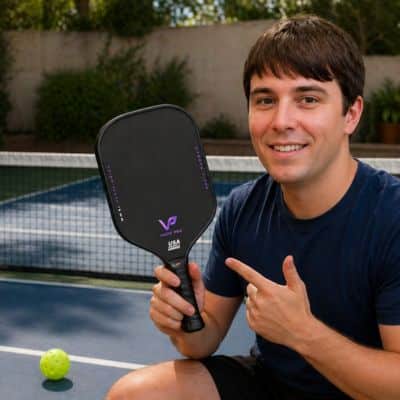
Dylan is a 4.5-rated pickleball player and gear writer who has tested 80+ paddles across 400+ hours on court. He rates spin, power, control, and forgiveness from real court time so you can buy smarter — no sponsored rankings, ever.