
Pickleball Serving Rules: Legal Serve Guide (Volley vs Drop)

Last Updated: October 2026
Quick Answer: A legal pickleball serve is hit underhand from behind the baseline, diagonally into the opposite service box, and must clear the kitchen. You can use a volley serve (hit out of the air) or a drop serve (let the ball bounce first). At least one foot stays behind the baseline at contact, and you have 10 seconds to serve once the score is called.
That’s the whole serve in one paragraph. Here are the pickleball serving rules in detail, because rec players argue about this stuff constantly, and half of them are wrong.
What Are the Two Legal Serves in Pickleball?
USA Pickleball allows exactly two serving methods. Everything else is a fault.
The volley serve
You hit the ball out of the air, before it bounces. Three motion rules apply, and since 2026 the rulebook says each one has to be clearly met. If the referee can’t tell, it’s a fault.
- Upward arc. Your arm must be moving upward when the paddle hits the ball. Forehand or backhand doesn’t matter, but no overheads and no sidearm chops.
- Below the waist. Contact must be below your waist. Your navel is the line.
- Paddle head below the wrist. The highest point of the paddle head can’t be above the highest part of your wrist at contact.
These three rules keep the serve underhand. It’s the serve almost every experienced player uses, because it gives you more power, more spin, and more consistency once you’ve grooved it.
The drop serve
You drop the ball, let it bounce, then hit it. Different rules apply:
- Release the ball from your hand or off your paddle face. Just let gravity do it. No throwing it down, no tossing it up, and no spin added with your fingers.
- The ball can bounce anywhere, on or off the court.
- Once it bounces, the waist, wrist, and upward-arc rules no longer apply. Swing however you want.
I started with the drop serve like most beginners do, and I wish I hadn’t. Learn the volley serve from day one if you can, because it scales better as you improve. But the drop serve is completely legal and a fine choice if your volley serve keeps faulting. You can also switch between the two on any point.
Volley serve vs drop serve at a glance
| Rule | Volley Serve | Drop Serve |
|---|---|---|
| Ball bounces first | No | Yes |
| Upward arm arc required | Yes | No |
| Contact below waist | Yes | No |
| Paddle head below wrist | Yes | No |
| Throwing or tossing the ball | Illegal | Illegal |
| Spin added by fingers at release | Illegal | Illegal |
| One serve attempt per rally | Yes | Yes |
Is a Spin Serve Legal in Pickleball?
Spin from your paddle at contact is legal. Spin from your fingers at release is not. The finger-flick “spin serve” that went viral a few years back is banned on both serves. So serve with as much paddle spin as you want, and release the ball cleanly.
Where Do Your Feet Have to Be When You Serve?
This is where most rec-game arguments start.
- When your paddle hits the ball, at least one foot must be on the ground behind the baseline.
- Neither foot may touch the baseline, the court inside it, or the imaginary extensions of the sideline and centerline until after contact.
- You can step into the court after you hit the ball. Your follow-through can carry you forward.
In plain English: keep your feet behind the line at contact. Lean over it all you want. Feet are what count. A lot of players stand 6 inches back just to be safe, and that’s smart.
You also have to be on the correct side. Even score means the right (even) court, odd score means the left (odd) court. Serving from the wrong side isn’t technically a foot fault, but it causes enough chaos that I’ve seen full games replayed over it. If you want the scoring side of this, read my pickleball scoring guide.
Where Does the Serve Have to Land?
- Diagonal. Always the diagonally opposite service court. Right court serves to right court, left to left.
- Past the kitchen. The serve must clear the 7-foot non-volley zone. Here’s the one everyone gets wrong: if the serve touches the kitchen line, it’s out. On any other shot the line is in, but the serve is the exception.
- Net cord. If your serve clips the net and still lands in the correct box, the ball is live and the rally continues.
How Long Do You Have to Serve in Pickleball?
Call the full score out loud before you serve. Once the score is called, you have 10 seconds to hit the serve. Take your time, but don’t wander off to get water. I break this down in my guide to the 10-second rule in pickleball.
What Serving Faults Lose You the Serve?
You get one serve attempt per rally, with no second serve like tennis. Fault the serve and you lose the serve. In doubles, that means it passes to your partner, or to the other team if you’ve both served. The common serving faults:
- Foot fault: stepping on or over the baseline, or outside the imaginary sidelines, at contact.
- Contact above the waist (volley serve): the low-to-high motion drifted too high.
- Paddle head above the wrist (volley serve): usually a sidearm swing creeping in.
- No clear upward arc (volley serve): a flat or downward swing.
- Illegal release: spinning the ball with your fingers, throwing it down, or tossing it up on a drop serve.
- Landing in the kitchen: including touching the kitchen line.
- Missing the diagonal box: long, wide, or into the net without clearing it.
Clip the net and land it in, and you’re still playing.
Can You Serve Overhand in Pickleball?
No. On a volley serve, the upward-arc, below-waist, and paddle-head rules make an overhand serve impossible. On a drop serve the motion restrictions are gone, but the ball is bouncing near the ground, so you can’t hit it like a tennis overhead in practice. Underhand is the rule.
What Is the Two-Bounce Rule After the Serve?
The serve starts the two-bounce rule. The receiving team must let the serve bounce before returning it, and then the serving team must let that return bounce too. Only after one bounce on each side can anyone volley. That’s why you don’t rush the net right after serving: the ball has to bounce in front of you first.
What Is a Nasty Nelson in Pickleball?
A Nasty Nelson is when the server aims the serve at the receiver’s partner. If the ball hits that partner before it bounces, the serving team wins the point. It’s legal as long as the serve is otherwise clean. It’s also a move you’ll hear about in rec play. I’m not recommending it, just telling you the rule.
What Matters Most When Serving, Beyond the Rules?
I’ve served with a lot of different paddles across my testing of 80+ paddles, and what matters more than gear is this: aim deep, not hard. A serve that lands in the back two feet of the box is worth more than a rocket that clips the net or sails long. Beginners should worry about getting 9 out of 10 serves in, period. Power comes later.
If you’re new to the game, start with my best pickleball paddles for beginners and the golden rule of pickleball. The serving rules make a lot more sense once you’re holding a paddle.
Pickleball Serving Rules FAQs
What makes a serve illegal in pickleball?
Anything that breaks the volley or drop serve requirements: contact above the waist, paddle head above the wrist, no clear upward arc (volley serve), spinning or tossing the ball at release, a foot fault at contact, or a serve that lands in the kitchen, the wrong box, or out. You get one attempt per rally, so a faulted serve means you lose the serve.
Can you bounce the ball before serving in pickleball?
Yes, that’s the drop serve. Drop the ball from your hand or paddle face, let it bounce, then hit it. Once the ball bounces, the upward-arc, below-waist, and paddle-head rules don’t apply. Your feet still have to be behind the baseline at contact.
What is the difference between a volley serve and a drop serve?
A volley serve is hit out of the air with three motion restrictions: upward arm arc, contact below the waist, and paddle head below the wrist. A drop serve lets the ball bounce first, and those restrictions disappear, but you can’t throw, toss, or spin the ball at release. Both must go diagonally past the kitchen from behind the baseline.
Can you step on the line when serving in pickleball?
No. At contact, neither foot may touch the baseline or the court inside it. At least one foot must be on the ground behind the baseline. You can step into the court after you hit the ball.
Is a spin serve legal in pickleball?
Paddle spin at contact is legal. Adding spin with your fingers during the release, the finger-flick “spin serve,” is banned.
What happens if the serve hits the net and lands in?
The ball stays live and play continues. A net-cord serve that lands in the correct service box is a good serve under USA Pickleball rules.
Affiliate disclosure: some links on this site are affiliate links. If you buy through them, I may earn a small commission at no extra cost to you. Full details: affiliate disclaimer.
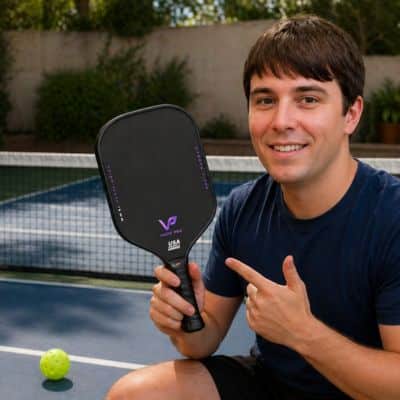
Dylan is a 4.5-rated pickleball player and gear writer who has tested 80+ paddles across 400+ hours on court. He rates spin, power, control, and forgiveness from real court time so you can buy smarter — no sponsored rankings, ever.