
Why Drilling Is The Key To Getting Better At Pickleball | 2026

Understanding why drilling is the key to getting better at pickleball becomes clear once players shift away from relying solely on equipment upgrades. I’m a 4.5-rated competitive player who has spent hundreds of hours drilling and testing gear on real courts, and what follows is the practical framework that actually accelerates on-court performance.
Many players search for the best pickleball paddle assuming gear will instantly fix their errors, but real gains come from consistent technical execution. Repeating core mechanics like dinks, third-shot drops, and volleys builds muscle memory, stabilizes your paddle angle, and develops the reliability that recreational play alone rarely achieves.
In this guide, I’ll break down why structured practice outperforms casual games, how professional athletes structure their training, and how specific paddle attributes can support your practice efficiency.
What Is Drilling In Pickleball?
Drilling in pickleball is a structured practice method where players isolate and repeat specific shots or footwork movements to build technique, precision, and consistency.
Instead of playing standard matches, drilling targets individual mechanics such as:
- Third-shot drops
- Kitchen line dinking exchanges
- Fast-hands volley blocks
- Transition zone resets
- Split-steps and court positioning
The core objective is controlled repetition. Repeating a specific mechanical movement hundreds of times builds motor memory, enabling you to execute the shot automatically under pressure during real matches.
From an analytical coaching standpoint, drilling improves three foundational performance attributes:
| Skill Attribute | How Drilling Improves It |
| Shot consistency | Stabilizes paddle face angles and swing paths |
| Ball control | Refines touch, spin generation, and placement |
| Decision speed | Reduces hesitation by making mechanics automatic |
Why Drilling Is The Key To Getting Better At Pickleball Faster Than Playing Games
Drilling accelerates improvement because it eliminates the variability and randomness of match play.
In a standard match, you might only face three or four third-shot drop opportunities. During a dedicated 10-minute drill session, you can execute that exact same shot over 100 times.
The distinction is straightforward:
- Games test your existing skills
- Drills build new skills
Drilling vs Playing Pickleball — Finding The Right Balance
While games provide critical pressure-testing environments, skill acquisition happens fastest when you dedicate the majority of your court time to focused repetition.
| Player Level | Drilling Ratio | Gameplay Ratio |
| Beginner | 70% | 30% |
| Intermediate | 60% | 40% |
| Advanced | 50% | 50% |
Essential Pickleball Drills That Improve Your Game
To maximize your court hours, focus on the four primary drill categories that dictate modern pickleball rallies:
1. Dinking Control Drills
Dinking establishes control at the kitchen line. Focus on keeping your trajectory low, maintaining a neutral wrist, and hitting cross-court targets to test your patience and paddle face stability.
2. Third-Shot Drop Drills
Practice hitting soft, arcing balls from the baseline into the opponent’s kitchen zone. This allows you to safely transition forward without giving your opponents an aggressive attack angle.
3. Volley Reaction Drills
Stand close to the net and exchange rapid-fire volleys with a partner. This trains fast hands, compact swings, and reflexive blocking techniques.
4. Footwork & Split-Step Drills
Timing your split-step right as your opponent contacts the ball ensures you are balanced and ready to move in any direction.
Solo Pickleball Drills — How To Practice Without A Partner
You do not always need a drilling partner to improve your mechanics. Utilize these solo methods:
- Wall Rebound Drills: Hit against a brick or concrete wall to build hand speed and rapid reflex timing.
- Shadow Swings: Practice your mechanical swing path and weight transfer in front of a mirror without hitting a ball.
- Target Cone Practice: Place cones in kitchen corners and practice dropping balls into designated target boxes.
How The Right Pickleball Paddle Supports Practice Efficiency
While drilling establishes technique, using equipment matched to your style helps you execute shots cleanly. For instance, a control-oriented, thermoformed paddle like the Vatic Pro Prism Flash provides the enlarged sweet spot and dwell time needed to fine-tune dinks and drops.
Final Thoughts
Drilling is the primary vehicle for rapid skill development because it replaces random match variance with high-volume, controlled repetition. By dedicating a consistent percentage of your court sessions to isolated technical work, you will build the muscle memory and consistency required to elevate your game.
How important is drilling in pickleball?
Drilling is essential for improving pickleball skills because it allows players to repeat specific shots and build muscle memory. Structured drills improve consistency, paddle control, footwork, and shot accuracy much faster than playing casual games alone.
What’s the best way to get better at pickleball?
The best way to improve at pickleball is to combine structured drilling with regular match play. Drills develop technique and consistency, while games help apply those skills in real competitive situations.
What is the #1 rated pickleball paddle for control?
For pure control and drilling precision, control-focused models like the Vatic Pro Prism Flash or CRBN TruFoam Genesis rank highest for providing the dwell time needed to master soft game mechanics. See the full best pickleball paddles rankings for complete category breakdowns.
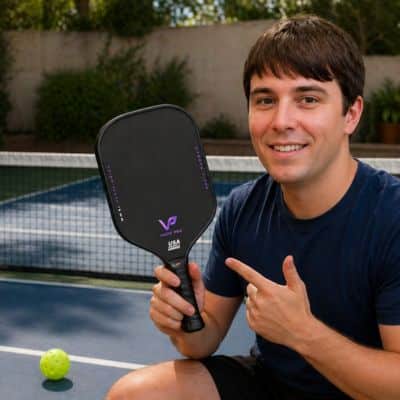
Dylan is a 4.5-rated pickleball player and gear writer who has tested 80+ paddles across 400+ hours on court. He rates spin, power, control, and forgiveness from real court time so you can buy smarter — no sponsored rankings, ever.