
CRBN TruFoam Genesis Review: My Honest 2026 Verdict

Last Updated: October 2026 · 20+ hours court-tested · By Dylan, 4.5-rated tournament player
Quick Verdict
This CRBN TruFoam Genesis review comes down to one standout claim: it eliminates the honeycomb. Instead of a standard plastic chamber core that develops dead spots over time, CRBN built the Genesis around a 100% solid foam matrix — and in my testing, it delivered zero drop-off from my first session through my most recent hits. At 14mm, it plays like a control paddle with the dwell time of something thicker, not the stiff power build the thickness would suggest. The honest limitation: this isn’t a power paddle, and if you rely on the paddle to generate pace for you, it’ll expose that quickly.
Who This Paddle Is For
This is a paddle for players who win through placement, not power — third-shot drops, soft resets, and moving dinks are exactly what the Genesis is built for. It’s also the right pick if you’ve been frustrated by a chamber-core paddle developing dead spots after a season of heavy use, or if you deal with arm or elbow soreness and want a core that absorbs shock better than a hollow honeycomb chamber.
It’s not the right paddle if you need it to add pop to your game. Players who rely on paddle-generated pace for serves and drives — rather than generating that pace themselves — will find the Genesis underwhelming without clean mechanics already in place.
CRBN TruFoam Genesis
Best Premium Control
| Shape Options | CRBN 1 – Elongated w/ Long Handle | CRBN 2 – Square (Tested) | CRBN 3 – Elongated | CRBN 4 – Hybrid/AeroCurve |
| Core Thickness | 14mm (only thickness offered — no 16mm option) |
| Core Material | 100% TruFoam™ Honeycomb-Free Solid Foam |
| Face Material | Toray T700 Raw Carbon Fiber |
| Weight | 8 oz |
| Handle Length | 5.5″ |
| Swing Feel | Balanced |
| USAP Approved | Yes (Also UPA-A + PBcor.43 Certified) |
| Includes | Neoprene cover |
On-Court Performance
Dinks and Kitchen Play
This is where the Genesis does its best work. The 100% foam core maximizes dwell time, letting you shape the ball precisely on third-shot drops and moving dinks. Resets in the transition zone held their depth without floating — predictable from the first session, no extended adjustment period needed.
Drives and Power Shots
At 14mm, this should feel like a power paddle. It doesn’t. CRBN tunes foam density at the molecular level to deliver the dwell time and soft response of a 16mm control build while keeping the cleaner baseline responsiveness of a thinner core. You get plenty of power for groundstrokes, but this isn’t a paddle that manufactures pace for you — you’re supplying the energy.
Serves
Spin on serves was solid but not the paddle’s headline feature — the Toray T700 face grips the ball well, but this is a control-first build, not a spin-first one. If serve spin is your top priority, the Six Zero Black Opal or the CRBN 3X have a higher ceiling here.
Resets and Defense
This is a genuine strength. The solid foam core’s dwell time makes resets under pressure feel more forgiving than the core thickness suggests — the ball sits on the face a fraction longer, giving you more room to redirect pace safely.
Feel, Pop & Power
The best way I can describe it: plenty of power for groundstrokes, forgiving touch for volleys. It doesn’t push you toward one end of the spectrum the way most paddles at this thickness do. If you’re used to a stiffer Gen 3 build, the softness here will feel like a real shift — give it a session to adjust before judging the power ceiling.
Spin & Ball Contact
The Toray T700 raw carbon face performs well, though spin isn’t where this paddle’s identity lives — its identity is in the honeycomb-free construction. In my testing window, the face showed zero drop-off from first session to most recent hits, with no break-in period and no fade. I haven’t logged the year-plus hours it would take to confirm that holds indefinitely, but the construction itself is a real engineering difference from chamber-core builds, not just marketing language.
Swing Weight & Maneuverability
The balanced swing feel keeps this maneuverable at the net despite the control-first identity. It doesn’t feel head-heavy or sluggish in hand battles — the foam core’s weight distribution stays even enough that quick exchanges don’t feel like a fight against the paddle.
Grip & Comfort
The solid foam absorbs shock noticeably better than a hollow honeycomb chamber, which matters if you deal with arm or elbow soreness — vibration through the contact handle is reduced compared to chamber-core paddles I’ve tested. One honest note: budget for an aftermarket overwrap. As a premium option, the stock grip gets slick during extended sessions.
Durability
This is the Genesis’s real pitch: no honeycomb chambers means no dead spots developing over time the way a standard chamber core can. In my testing window, I saw zero drop-off in performance from first hit to last. I haven’t logged the extended, multi-season hours it would take to confirm that holds indefinitely, but the engineering difference is real, not just a marketing claim.
Value for Money
This represents a significant investment, and it’s not the right one if you need the paddle to generate power for you — you won’t get a return on that specific need here. If you’re not consistently playing at 3.5+ and prioritizing control, the Vatic Pro Prism Flash delivers comparable touch at a considerably lower price. Where the Genesis earns its cost is the durability story: if chamber-core dead spots have cost you paddles before, this is a real solution, not just an upsell.
How It Compares
vs. CRBN 3X Power Series: These are different paddles solving different problems, even though they share a brand. The 3X is built for baseline power and long-term spin-grit retention via its thermoformed, foam-injected polymer honeycomb core. The Genesis eliminates the honeycomb for a softer, more control-first feel with zero dead-spot risk. Choose the 3X if you want driving power and spin durability; choose the Genesis if you win through placement and want a core that won’t develop dead spots.
vs. Six Zero Ruby: The Ruby’s aramid fiber face gives you more tactile feedback on contact, while the Genesis’s solid foam core prioritizes dwell time and shock absorption above all else. If you want a control paddle you can feel the ball on clearly, try the Ruby; if you want the plushest possible touch with zero break-in period, the Genesis is the stronger pick.
Final Verdict
If you’re tired of chamber-core paddles developing dead spots six months into ownership, the Genesis is a genuinely different engineering approach, not just a marketing claim wrapped around the same old honeycomb. It rewards players who already win through placement and touch — it won’t manufacture power for a passive swing, and it demands a real budget commitment. For the right player, that trade is worth it.
Buy if:
You win by placement, not power — the 100% foam core maximizes dwell time for precise third-shot drops and resets.
You’re tired of core crush — the honeycomb-free construction eliminates dead spots that develop in chamber-core paddles over time.
You deal with arm or elbow soreness — the solid foam absorbs shock noticeably better than hollow honeycomb chambers.
Pass if:
You need the paddle to generate power for you — this core is built for control, not for players relying on paddle-generated pace.
You’re on a tight budget — the Vatic Pro Prism Flash delivers comparable control at a considerably lower price.
Serve spin is your top priority — the Black Opal or CRBN 3X have a higher spin ceiling.
FAQs
Is the CRBN TruFoam Genesis the same as the CRBN 3X?
No — these are genuinely different paddles. The 3X uses a thermoformed, foam-injected polymer honeycomb core built for baseline power and spin durability. The Genesis eliminates the honeycomb for a softer, control-first foam core with no dead-spot risk.
Does the honeycomb-free core actually make a difference?
In my testing, yes. I saw zero performance drop-off from my first session through my most recent hits — no break-in period, no fade. It’s a real construction difference from chamber-core paddles, not just marketing language.
Is the CRBN TruFoam Genesis good for beginners?
Not as a first paddle. It rewards players who already generate their own pace and win through placement — beginners still building power will find it underwhelming without clean mechanics in place.
What skill level is this paddle best for?
3.5 and up, especially players who already identify as control-first rather than power-first in their game style.
Is the CRBN TruFoam Genesis worth the price over a budget control paddle?
Only if the honeycomb-free durability story matters to you specifically — if you’ve had chamber-core paddles develop dead spots before. If pure budget-conscious control is your priority, the Vatic Pro Prism Flash gets you most of the plush kitchen feel for considerably less.
Does the Genesis come in a 16mm version like the CRBN 3X?
No. Unlike the 3X, which ships in both 14mm and 16mm, the Genesis is built exclusively at 14mm — CRBN’s foam-density tuning is what lets a thinner core play like a thicker one, so there’s no thickness choice to make here.
Every paddle on BestPicklePad is purchased with my own money and tested on my own courts. No brand paid for this placement, and no paddle was sent to me for free.
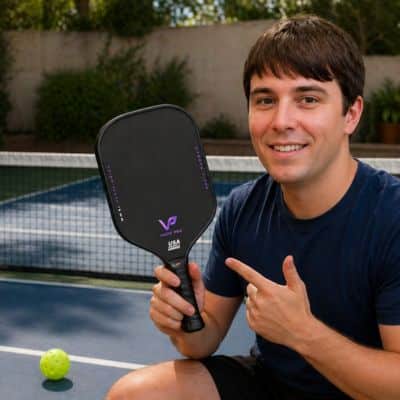
Dylan is a 4.5-rated pickleball player and gear writer who has tested 80+ paddles across 400+ hours on court. He rates spin, power, control, and forgiveness from real court time so you can buy smarter — no sponsored rankings, ever.