
CRBN 3X Review: Does the Spin Longevity Claim Actually Hold Up?
Last Updated: October 2026 · One of my most extensively tested paddles · By Dylan, 4.5-rated tournament player
Disclosure: I bought this paddle with my own money, and no brand paid for this placement. As an Amazon Associate, I earn from qualifying purchases made through links on this page, at no extra cost to you, and commissions never change a score. See how I test paddles.
CRBN 3X Review: Quick Verdict
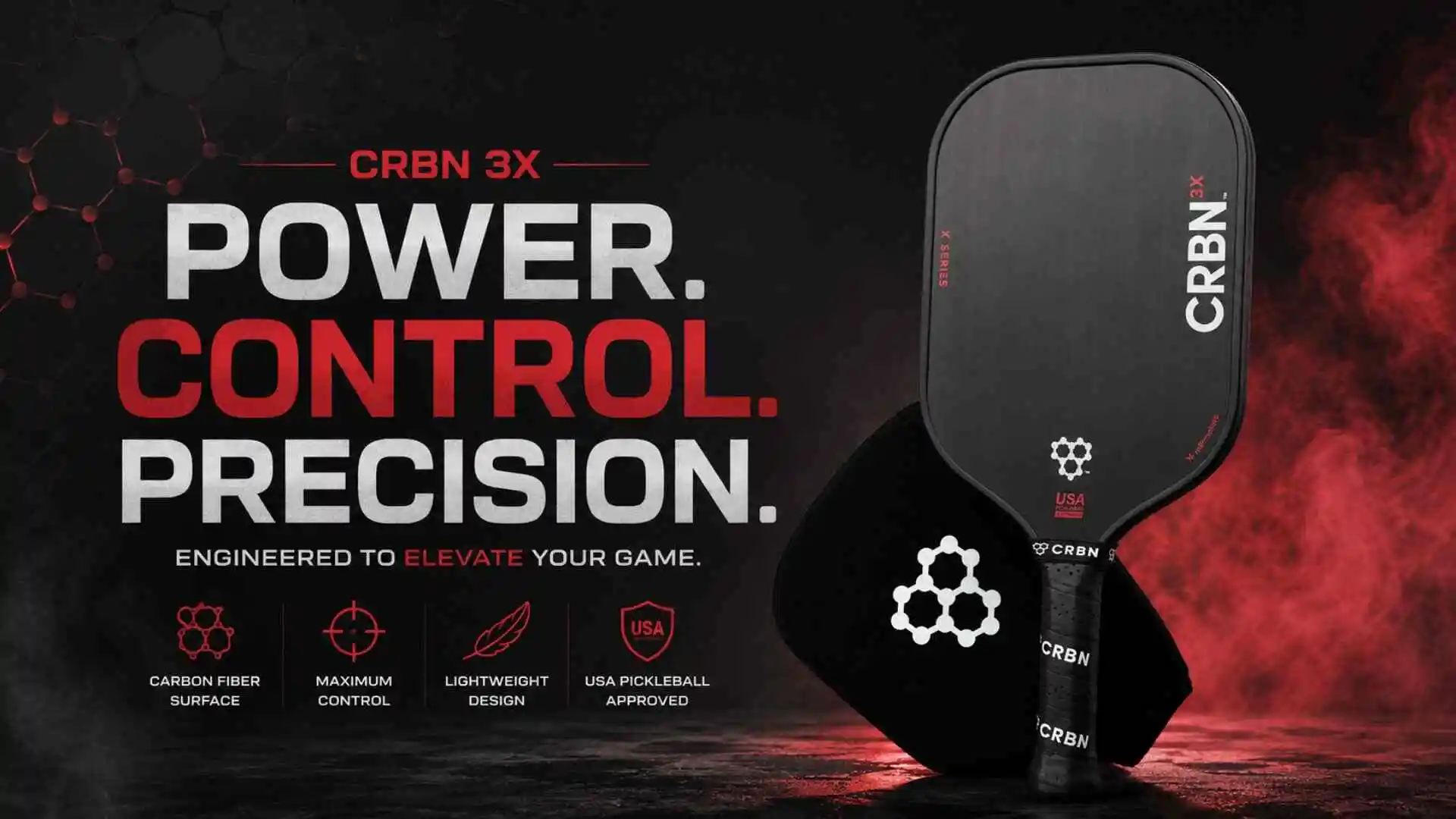
This CRBN 3X review comes down to one question: does the spin-longevity claim hold up under real testing? Yes. The face design resists the “balding” that kills standard raw carbon surfaces, and that durability is the paddle’s real selling point over flashier competitors. The trade-off is feel: it’s stiffer and less forgiving at the kitchen than the Six Zero Double Black Diamond, and the 14mm version’s head-heavy balance will slow your hands in fast net exchanges. If you want a paddle that holds its spin for months instead of weeks, this earns its premium price. If you want the plushest possible soft game, look elsewhere.
Who This Paddle Is For
This is a paddle for intermediate-to-advanced players who prioritize long-term spin performance over out-of-the-box plushness. If you’ve been burned by a raw carbon paddle going “bald” after a few weeks of heavy play, or you’re a baseline-first player who wants real plow-through on drives, the 3X is built for you. The 16mm version suits all-court doubles players who still want that durability edge; the 14mm suits aggressive baseliners at 4.5+ who don’t mind trading some hand speed for depth on drives.
It’s not the right fit if your game lives entirely at the kitchen and you want the softest, most forgiving touch available, because the stiffer face profile asks more of your hands on soft resets than a plush control build like the Six Zero DBD.
CRBN 3X Series
Best Spin Longevity · 16mm for Control · 14mm for Power & 4.5+
| Specification | 16mm Version | 14mm Version |
|---|---|---|
| Shape | Elongated | Elongated |
| Dimensions | 16.5″ L × 7.5″ W | 16.5″ L × 7.5″ W |
| Weight | 7.8–8.1 oz | 7.8–8.1 oz |
| Swing Feel | Balanced, intuitive | Noticeably head-heavy for its thickness |
| Spin Tier | Elite | Elite |
| Grip Length | 5.25″ | 5.25″ |
| Core Thickness | 16mm | 14mm |
| Core Material | Polymer honeycomb | Polymer honeycomb |
| Face Material | Carbon Fiber | Carbon Fiber |
| Thermoformed | Yes | Yes |
| USAP Approved | Yes | Yes |
These are my ratings from on-court testing, not manufacturer numbers.
Dylan’s Rating (9.1) is the average of the four category scores above. Power 9.6, Control 8.4, Spin 9.5 and Forgiveness 8.8 add up to 36.3, which is 9.075 and rounds to 9.1 out of 10.
On-Court Performance
Dinks and Kitchen Play
At the kitchen line, the 3X offers a surprisingly stable platform. The ball sinks into the face nicely, giving you excellent physical feedback on delicate drop shots and angled dinks. Compared to the Six Zero Double Black Diamond, which has a softer, more plush feel at the kitchen, the CRBN 3X has a slightly stiffer, crisper response. This stiffness takes a few games to adjust to if you’re coming from a traditional, non-thermoformed control paddle, but it rewards you with extremely predictable depth once you find the sweet spot.
Drives and Power Shots
When you step back to drive the ball, the “Power Series” name makes sense. The foam-injected perimeter gives the paddle a lot of built-in plow-through, keeping drives low, heavy, and fast. The 14mm version’s head-heavy balance gives you massive power on deep drives and overheads, though it can slow your hands during rapid-fire hand battles at the net. If you want pure, lightning-fast hand speed, the 16mm version or the Six Zero DBD handles quicker, but the 14mm 3X wins out on pure baseline driving force.
Serves
The elongated shape and elite spin tier translate directly to serves. I got consistent, visible topspin bite on my serve testing without needing to overswing, because the carbon face grips the ball long enough to generate real rotation, which matters most on serves where you’re generating your own pace from a standing start.
Resets and Defense
Absorbing hard, incoming drives is where the 3X shines, provided you meet the ball cleanly. The perimeter edge-foam stability means off-center hits don’t completely die off the face. Keep in mind the stiffer face profile means you have to actively soften your hands more than you would with the Six Zero DBD. The DBD absorbs raw pace a bit more naturally, whereas the 3X demands a deliberate, relaxed grip to drop the ball safely back into the kitchen.
Feel, Pop & Power
This is a paddle that plays firm. The thermoformed unibody construction and foam-injected perimeter give it a crisper, more responsive pop than a plush control build, closer to a Gen 3 feel than the softer Gen 4 foam cores I’ve tested elsewhere. If you like direct, snappy feedback off the face, this works in your favor. If you’re coming from a soft 16mm sandwich paddle, budget a session or two to recalibrate your touch.
Spin & Ball Contact: The Longevity Claim
CRBN makes a major marketing claim about long-term spin durability, and extended testing on this paddle strongly supports it. Fresh out of the box versus after heavy play, the spin loss on this paddle was minimal, a real contrast to standard raw carbon faces, which often show visible friction drop-off over the same testing window. The face design successfully resists the typical “balding” that ruins standard raw carbon surfaces, making it one of the more durable spin surfaces I’ve tested.
Value Note: A budget-friendly option like the Vatic Pro Prism Flash gets you real, comparable spin performance out of the box for a fraction of the cost. It just doesn’t hold its grit over months of heavy play as well as the premium 3X.
Swing Weight & Maneuverability
The 16mm version’s balanced, intuitive swing feel makes it the more versatile of the two for doubles players who split time between baseline and kitchen. The 14mm version is noticeably head-heavy for its thickness. That mass toward the head is what gives it the extra drive power, but it’s a real trade-off in fast hand battles. Pick your version based on which side of that trade-off matters more to your game.
Grip & Comfort
At 5.25″, the grip length is on the shorter side compared to some elongated competitors. The 11SIX24 Jelly Bean’s 6″ handle, for example, gives noticeably more room for a two-handed backhand. If you rely on two hands regularly, this is worth testing in person before you buy. The thermoformed unibody construction does a reasonable job dampening vibration on off-center contact, which helps offset the stiffer face feel somewhat.
Durability
Beyond the spin-retention story above, the thermoformed, foam-injected core construction has held up cleanly through testing, with no dead spots and no core crush. I haven’t logged the multi-season hours it would take to speak to durability with full long-term confidence, but nothing in testing so far has raised a flag.
Value for Money
This sits at a premium price point, and the spin-longevity advantage is what justifies it, because you’re paying for a face that won’t need replacing or working around in six months. It’s not the right buy if you’re not going to put in the hours that make that durability advantage matter; a casual once-a-week player won’t see the same return on the investment that a competitive 3–4x-a-week player will. For that casual player, the Vatic Pro Prism Flash gets you real spin performance at a fraction of the cost. You’ll just replace the grit sooner.
How It Compares
vs. Six Zero Double Black Diamond: Choosing between these comes down to a clear trade-off between hand speed and long-term surface durability. The DBD offers a more plush, naturally forgiving feel at the kitchen and absorbs heavy pace with less effort; it also feels lighter and faster in hand battles. The 3X, particularly the 14mm, trades some of that hand speed for heavier baseline drives and a carbon face that holds its elite spin grit months longer than the competition. Go with the DBD if your priority is ultimate speed and a plush soft game. Choose the 3X if you want maximum baseline driving power and long-term spin durability.
vs. JOOLA Hyperion CFS 16mm: If you want another premium option with an iconic shape, my full JOOLA Hyperion CFS 16mm review breaks down how it stacks up on feel and power.
Final Verdict
If the “balding carbon face” problem is the thing that’s been holding you back from a raw carbon paddle, the 3X is one of the most convincing answers to that problem I’ve tested. It’s not the plushest paddle at the kitchen, and the 14mm version asks real questions of your hand speed, but if you play often enough that spin durability actually matters over a season, it earns its price tag.
Buy if:
You’ve been burned by a raw carbon face going bald after a few weeks, and the 3X’s spin retention is a real, measurable difference.
You’re a baseline-first player who wants heavy plow-through on drives without sacrificing spin.
You play often enough (3+ times a week) that long-term durability actually pays off the premium price.
Pass if:
You want the plushest possible soft game, and the Six Zero DBD absorbs pace more naturally at the kitchen.
You use a two-handed backhand often, and the 5.25″ grip is short compared to some elongated competitors.
You’re a casual, once-a-week player, because the Vatic Pro Prism Flash gets you comparable spin for a fraction of the cost.
FAQs
Is the 14mm or 16mm version of the CRBN 3X better?
The 16mm offers a slightly more stable sweet spot and a more controlled, forgiving feel for all-court play. The 14mm is thinner but carries a distinct head-heavy balance, making it a high-powered weapon for aggressive players who want maximum baseline depth and don’t mind sacrificing some hand speed at the kitchen.
What makes the CRBN 3X different from the original CRBN 1X and 2X?
The “X” series denotes CRBN’s thermoformed, foam-injected core technology, which offers vastly more power, stability, and sweet-spot forgiveness than their original, non-thermoformed control paddles. The 3X specifically features an elongated shape with a slightly flared top, optimized to maximize leverage, reach, and swing speed.
Does the CRBN 3X actually hold its spin longer than other carbon paddles?
In my testing, yes. The spin loss from fresh-out-of-the-box to heavy use was minimal compared to standard raw carbon faces, which typically show visible friction drop-off over the same testing window.
Is the CRBN 3X worth the price over a budget carbon paddle?
Only if you’re playing often enough for the spin-durability advantage to matter. A budget option like the Vatic Pro Prism Flash gets you comparable spin out of the box for a fraction of the cost. It just won’t hold that grit as long under heavy play.
Is the CRBN 3X good for beginners?
Not as a first paddle. The stiffer face profile and (on the 14mm) head-heavy balance ask more of your mechanics than a forgiving beginner build. It’s better suited to intermediate players and up who already have some consistency in their swing.
What is Dylan’s Rating for the CRBN 3X?
I rate it 9.1 out of 10. That’s the average of four scores from my court testing: Power 9.6, Control 8.4, Spin 9.5 and Forgiveness 8.8. Power and spin carry it, and the stiffer face is why control and forgiveness score lower.
Dylan is a 4.5-rated pickleball player and gear writer who has tested 80+ paddles across 400+ hours on court. He rates spin, power, control, and forgiveness from real court time so you can buy smarter — no sponsored rankings, ever.